

Infant Sleep on Stomach: Is It Safe? (Pediatrician Guidelines)
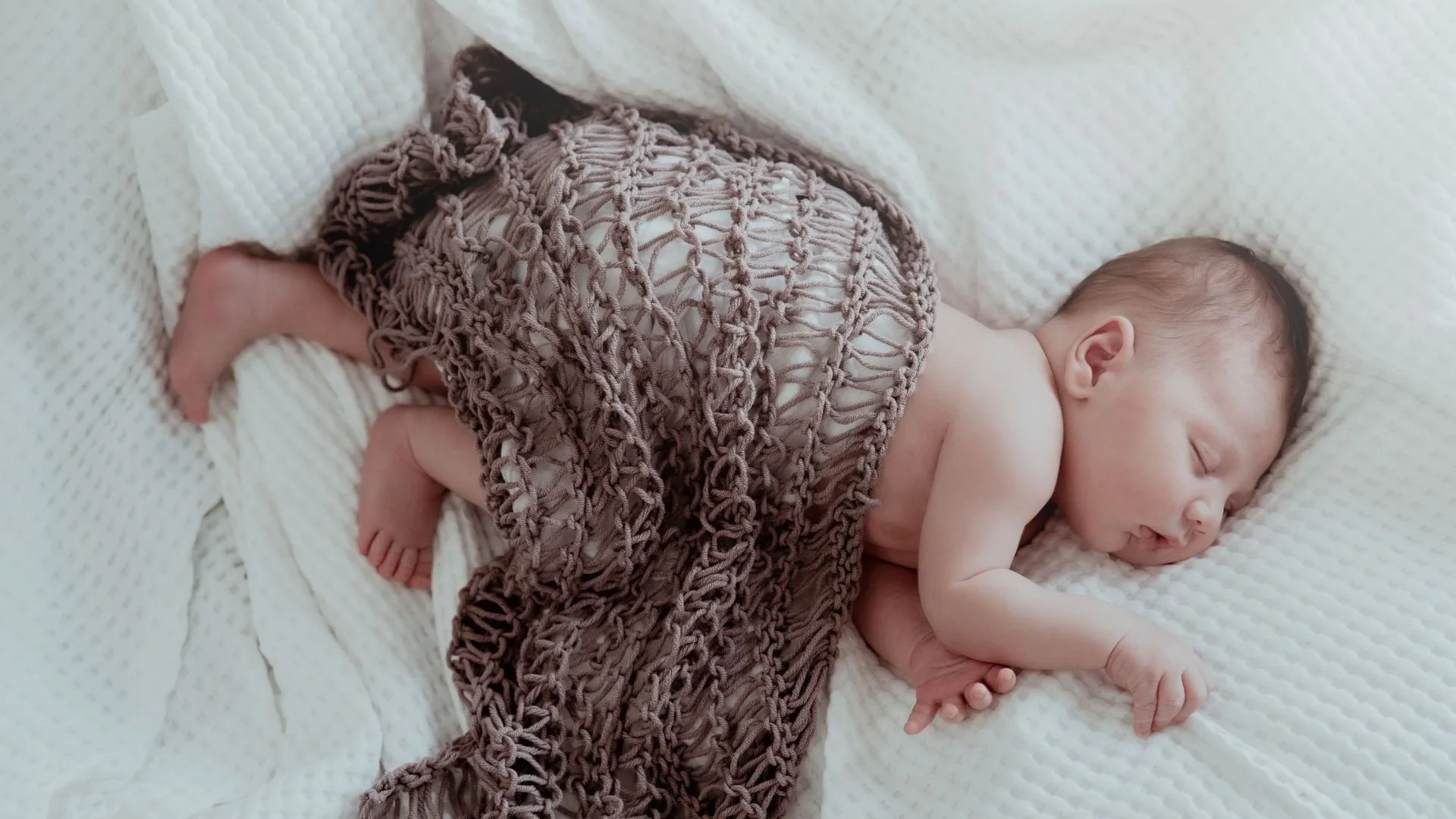
The American Academy of Pediatrics (AAP) is clear. You must place your baby on their back for every sleep during their first year. But if your infant can independently roll from back to stomach and stomach to back, you do not need to flip them. Just ensure their crib is entirely bare.
It is 3:17 AM. You are staring at the infrared monitor with your thumb hovering over the zoom button. Your baby, who you carefully placed flat on their back two hours ago, is now face down in the mattress.
Cue the immediate heart drop.
Every new parent knows the safe sleep rules. "Back is best." Your pediatrician said it. Your mother-in-law repeated it. The hospital nurses made you sign a piece of paper about it before you could even take the baby to the car. So when you see your infant defying gravity to squish their face into a fitted sheet, panic is the natural response.
Take a breath. We are going to break down what the medical guidelines actually say. We will cover when you need to intervene. We will cover the specific milestones to watch for. Most importantly, we will cover when you can finally go back to sleep yourself.
The Core Rule: Should Infants Sleep on Their Back or Stomach?
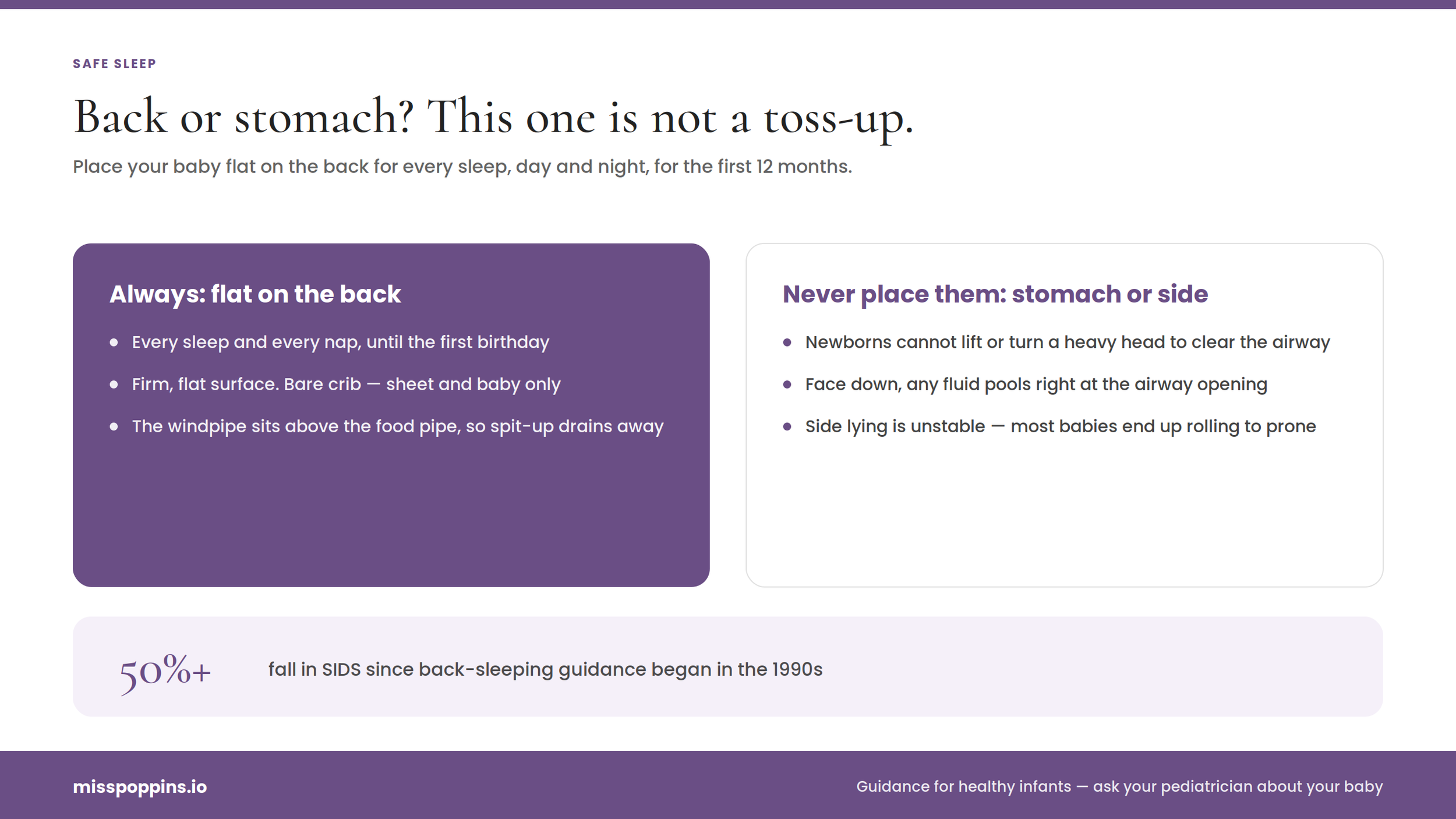
If you are wondering whether an infant should sleep on their back or stomach, the medical consensus is absolute.
You must place your infant flat on their back for every single sleep cycle until they turn one year old. The AAP established this guideline in the 1990s. Since then, the rate of Sudden Infant Death Syndrome (SIDS) has dropped by over 50%.
Why does back sleeping matter so much? It comes down to basic human anatomy. When a baby sleeps on their back, their trachea (the windpipe) sits directly on top of their esophagus (the tube going to the stomach). If they spit up, gravity keeps the fluid in the lower tube. They just swallow it. When a newborn sleeps on their stomach, the windpipe is underneath. Fluid can pool right at the airway opening. This significantly increases the risk of choking.
Can a newborn sleep on their stomach? No. Full stop. Newborns do not have the neck strength or motor control to lift their heavy heads and clear their airway if they get stuck. Placing a newborn on their stomach or side is a massive safety hazard. In fact, unaccustomed stomach sleeping increases the risk of SIDS dramatically. If a baby is used to sleeping on their back and is suddenly placed on their stomach for a nap, the risk jumps by up to 45 times.
When Can an Infant Safely Sleep on Their Stomach?
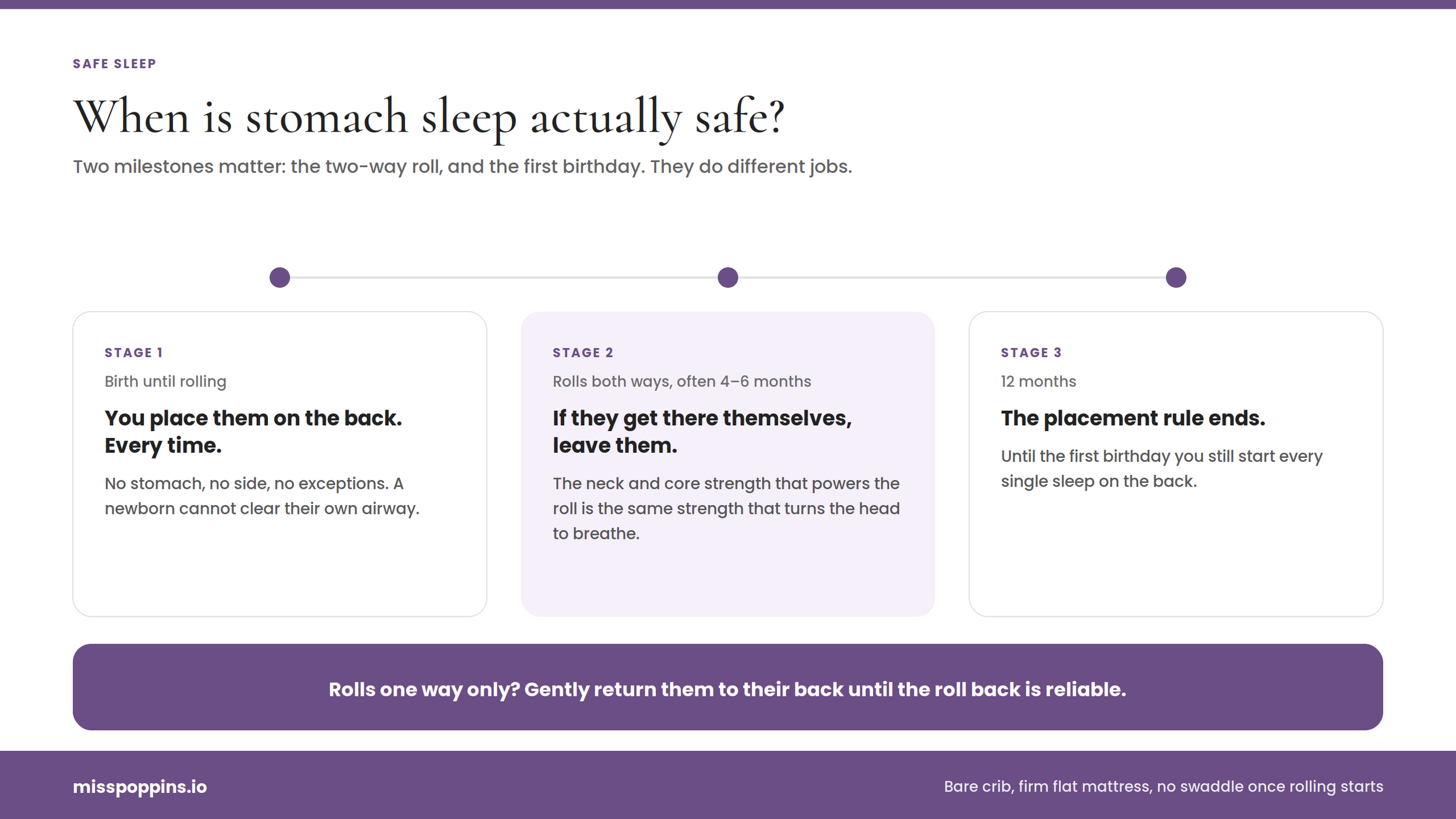
The rules shift as your baby grows. There are two distinct milestones to watch for here. The rolling milestone and the 12-month rule.
The AAP states parents must place babies on their backs for the entire first year. You do not get to intentionally place them face down at bedtime until after their first birthday.
But babies have minds of their own. Around the middle of their first year, they start moving. Once an infant is strong enough to reliably and independently roll from back to tummy, and then from tummy back to back, you no longer have to police their sleep position all night. If you place them on their back and they flip over, they are generally considered safe to stay there.
Can a 4 or 5 Month Old Sleep on Their Stomach?
Can a 5 month old sleep on their stomach? What about a 4 month old? This is exactly when most babies start practicing their gymnastics. It is a massive developmental leap.
If your 4 or 5 month old is rolling onto their stomach during the night, the most important thing you can do is evaluate theirsleep environment. The crib must be completely bare. No loose blankets. No stuffed animals. No mesh bumpers. Just a firm mattress and a fitted sheet. A firm surface means it does not indent when your baby is lying on it.
In our coaches' experience working with thousands of families, this transitional phase is often the most stressful for parents. You spend hours watching the monitor. You worry about every little movement. But if your 5 month old has mastered the two-way roll, their neck and core muscles are strong enough to protect their airway. They can turn their head to breathe.
The "Midnight Panic": What Should I Do If My Baby Rolls Onto Their Stomach?
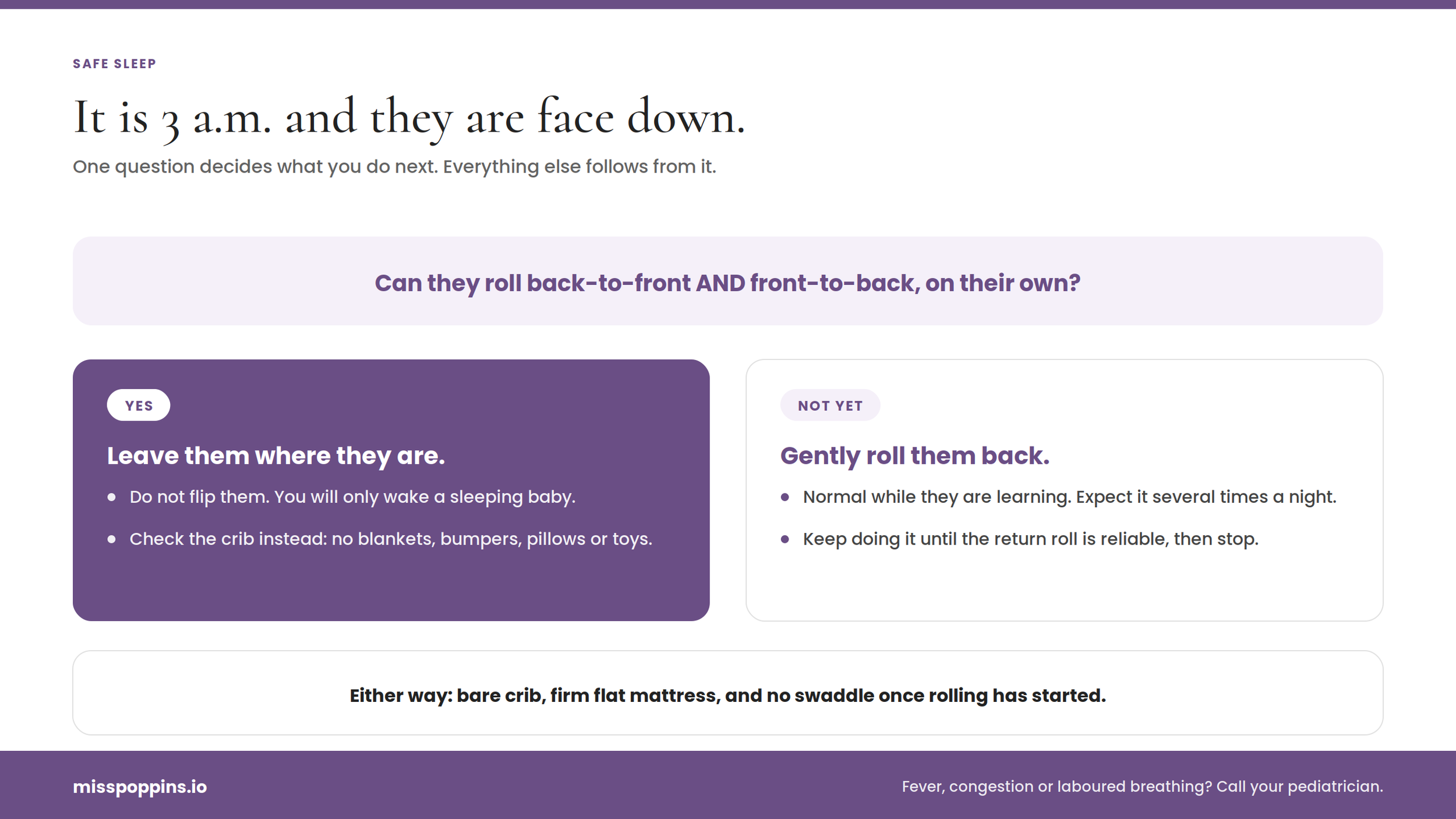
You see them on their stomach. Do you go in and flip them? Let us look at the protocol.
If they can roll both ways independently: Leave them. Intervening will only wake up a sleeping baby. That guarantees nobody gets any rest. They have the physical strength to adjust themselves.
If they can only roll one way (usually back to stomach) and get stuck: You need to flip them back over. This happens a lot in the early stages of learning to roll. They will flip onto their tummy, realize they are stuck, and usually cry out for help. Go in, gently return them to their back, and soothe them. Yes, this means you might be flipping them multiple times a night for a week or two.
"Parents often lose sleep staring at the monitor the first time their baby rolls," notes Sarah Jenkins, Certified Pediatric Sleep Coach at MissPoppins. "If they got themselves there independently, your job is to ensure the crib is clear, not to play a continuous game of flipping them all night."
Swaddling and Tummy Sleep: The Crucial Transition
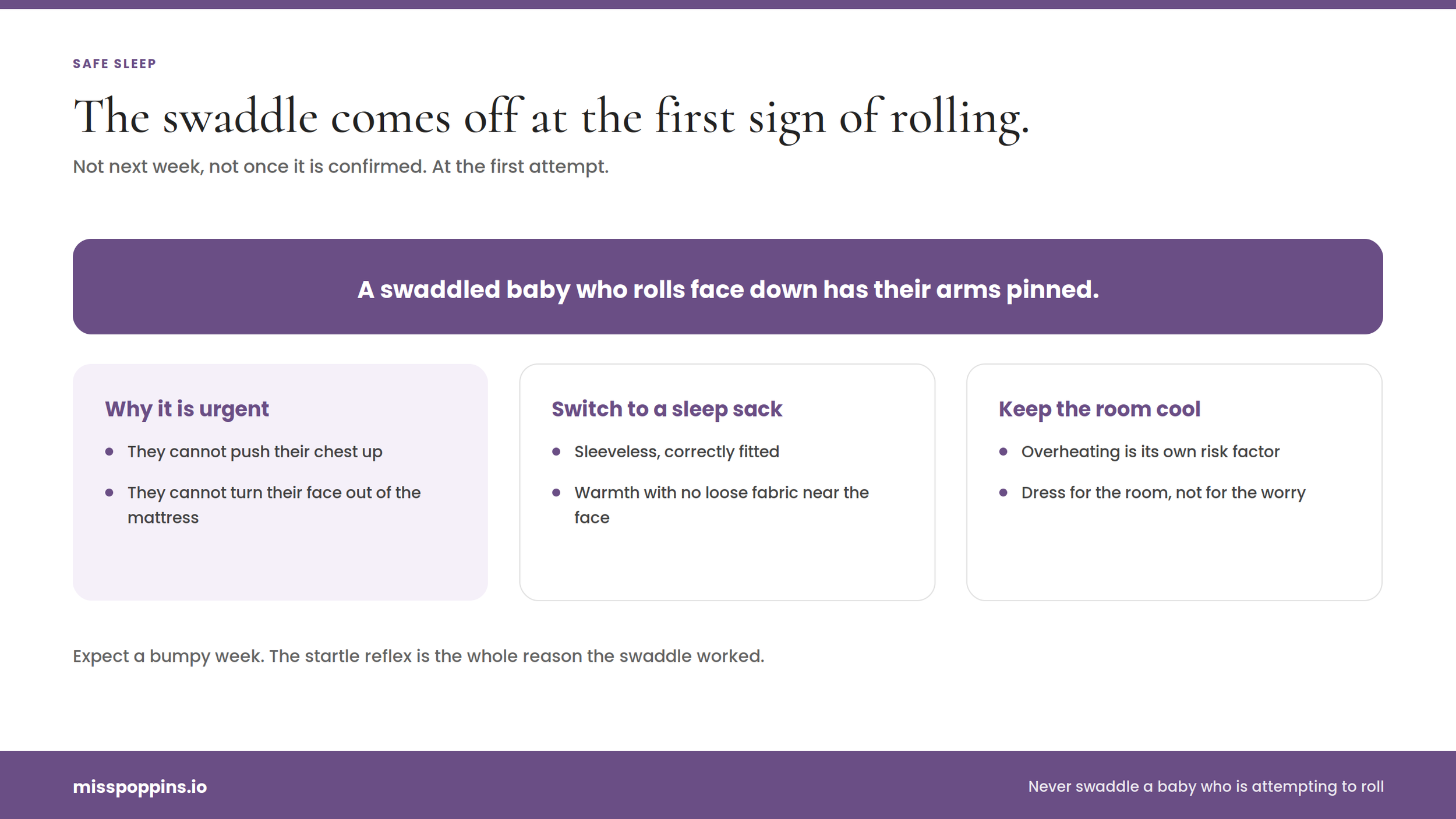
If your baby shows any signs of attempting to roll over, you must immediately stop swaddling.
This is non-negotiable. A swaddled baby who rolls onto their stomach has their arms pinned. They cannot use their hands to lift their chest or push their face away from the mattress. This creates a severe suffocation hazard.
Transitioning out of the swaddle can be bumpy. Babies rely on that tight pressure to calm their startle reflex. You can read up on our swaddling 101 rules to understand the mechanics. If you want to know what not to do, check our guide on swaddling dos and donts.
Move to a wearable blanket or sleep sack right away. A sleep sack keeps them warm without the risk of loose fabrics covering their face. You can learn more about how to dress a baby for sleep to make this shift easier without overheating them. Overheating is another major risk factor for SIDS, so keep the room temperature cool and comfortable.
Why Your Infant Likes to Sleep on Their Stomach (and How to Handle It)
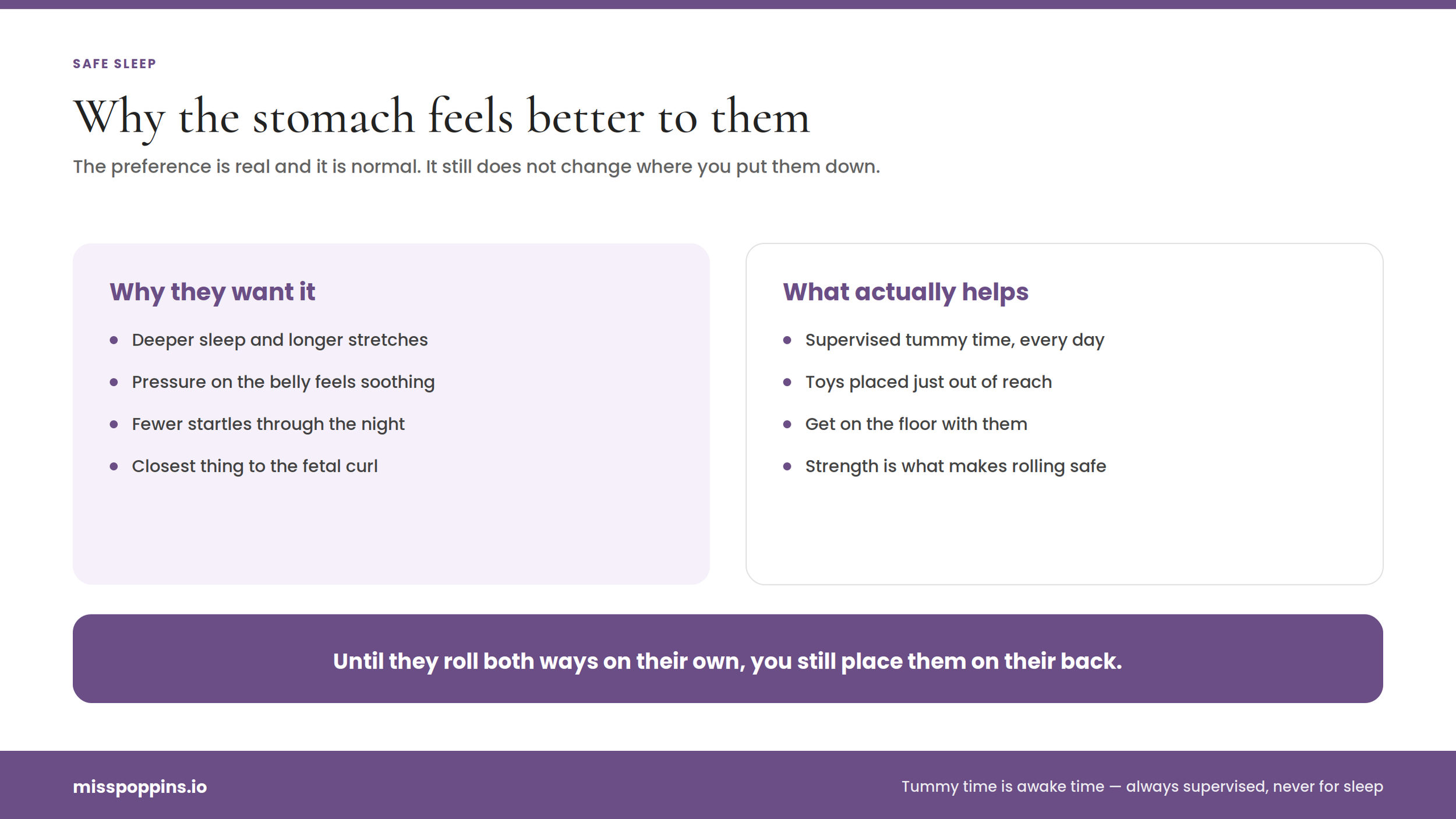
It is incredibly common for parents to realize their infant wants to sleep on their stomach. Many babies simply sleep deeper and longer on their bellies. The pressure on their abdomen can feel comforting. They startle less frequently. The fetal position is familiar and secure.
If your infant likes to sleep on their stomach but is not yet rolling independently, you still cannot place them face down for sleep. How do you handle it?
Daytime tummy time.
You have to build their core strength during waking hours. Lots of supervised tummy time on a play mat helps them develop the neck, shoulder, and arm muscles required to roll safely. The harder they work during the day, the faster they will master the two-way roll. Place toys just out of their reach. Get down on the floor with them. The goal is to motivate them to move.
Once they achieve that milestone, they can choose their own sleep position at night. For a deeper look at building great routines from day one, see our general guide on healthy sleeping habits for the first month or review our comprehensive manual for unlocking the secrets of infant sleep.
The "Real Talk" Reality Check
Let us be honest about the messy reality of infant sleep. The textbooks make it sound simple. Life gets complicated.
Maybe daycare told you they nap perfectly on their backs. At home, they refuse and demand to be held. Maybe you are functioning on three hours of broken sleep. You and your partner are arguing at 3:00 AM about whether to just let the baby sleep on your chest so you can finally close your eyes. We know exactly how tempting it is to compromise on sleep rules when you are desperate for rest. Working parents are stretched incredibly thin. The exhaustion is physical. It hurts.
But safe sleep boundaries exist to protect your child when you are too exhausted to watch their every breath. Stick to the guidelines. The difficult phases will pass. Do not resort to unsafe positions out of desperation.
Decoding Sleep Interruptions: Is It Position or Something Else?
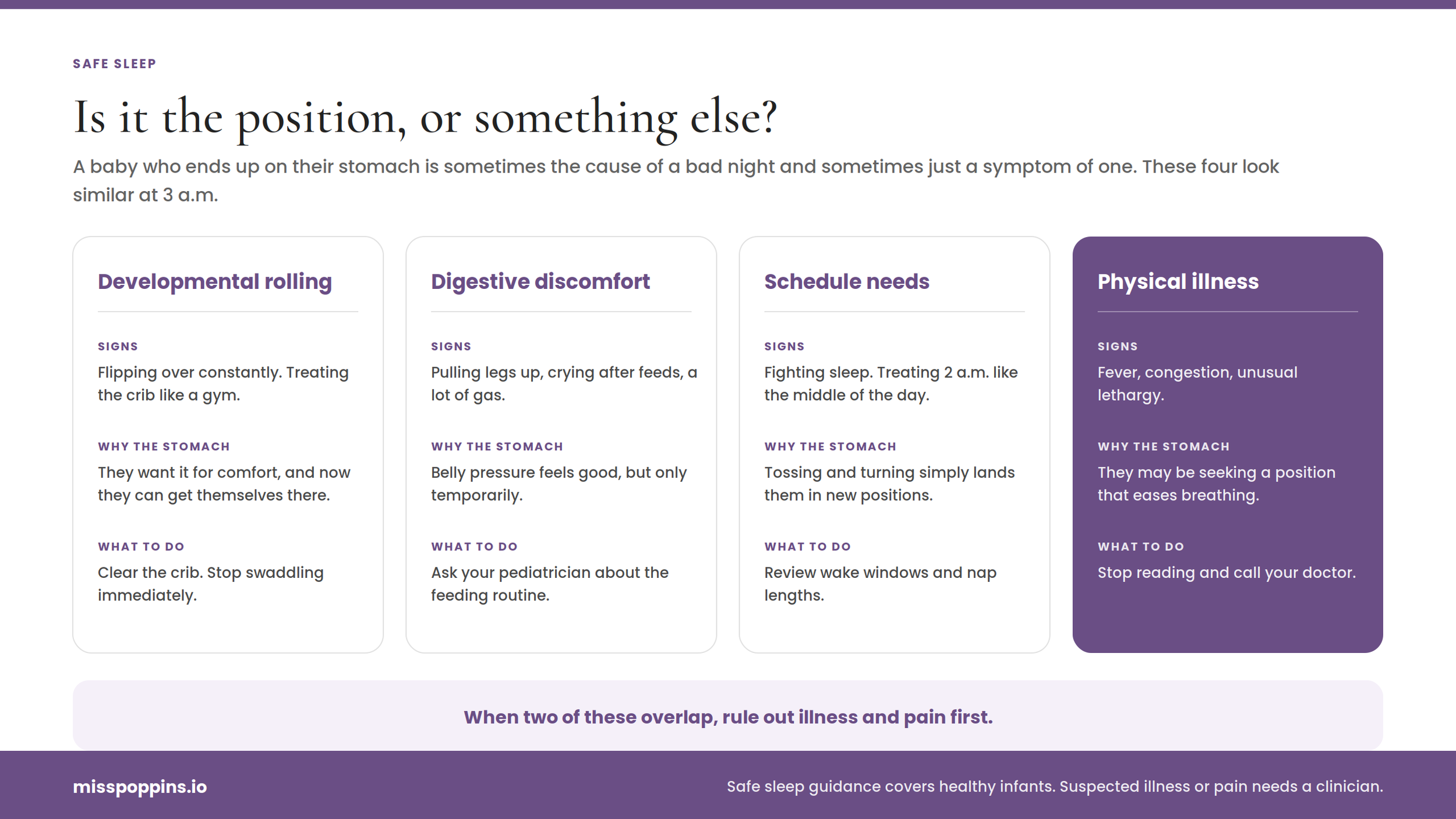
Sometimes a baby rolling onto their stomach is not just about comfort. Use this table to understand if their sleep disruption is related to position or another factor entirely.
Escalation Guidance: Stop reading this article and call your pediatrician immediately if your infant is showing signs of illness, struggling to breathe, running a fever, or if you suspect they are in physical pain. Safe sleep guidelines apply to healthy infants. Medical conditions require professional clinical guidance.
Support That Understands Your Reality
Parenting is not meant to be done in isolation at three in the morning. If you are struggling with sleep transitions, rolling milestones, or simply need an expert to validate your approach, MissPoppins is here.
Why Families Trust MissPoppins:
5,000+ families supported through major infant milestones.
4.8-star rating from parents who finally got their sleep back.
150+ years of combined experience across our vetted network.
Certified, non-clinical coaches who focus on evidence-based strategies.
Private, encrypted sessions you can take from your living room.
Explore Postpartum & Newborn Coaches / Consult a Newborn Care Specialist
Download the MissPoppins App on the App Store and Google Play today to manage bookings, track sleep habits, and message your coach directly.
Are you ready to build a sleep plan that brings peace to your whole household?
FAQs
Q1: What should I do if my baby rolls onto their stomach while sleeping?
If your baby can confidently roll from their back to their stomach and from their stomach to their back, you can safely leave them in that position. Always ensure the crib is completely free of blankets, pillows, and toys. If they cannot roll back independently, gently return them to their back.
Q2: Is it safe to swaddle a baby who can roll onto their stomach?
No. You must stop swaddling the moment your baby shows any signs of attempting to roll over. A swaddled baby face down cannot use their arms to lift their head. This presents a severe suffocation risk. Switch to a sleeveless sleep sack immediately.
Q3: Why does my newborn only sleep when placed on their stomach or chest?
Newborns love the warmth, heartbeat, and secure feeling of being held against a chest. However, falling asleep on an adult's chest or stomach is only safe if the adult is fully awake and alert. You must transfer the baby to a flat, firm sleep surface on their back for unsupervised sleep.
Q4: Does daytime tummy time help babies who roll over at night?
Yes. Ample, supervised tummy time during the day builds the neck, shoulder, and core muscles required for independent rolling. The stronger they get during the day, the safer they will be when maneuvering around the crib at night. It is a vital developmental exercise.
Q5: Are "breathable" mattresses completely safe for stomach sleeping?
No mattress prevents SIDS. While some companies market their mattresses as "breathable," the AAP maintains that the safest sleep position for an infant's first year is on their back on a firm, flat surface. A marketed label does not override medical guidelines.
Q6: Can a baby sleep on their stomach for gas relief?
You should never place a baby on their stomach to sleep for gas relief. While gentle pressure on the tummy during awake, supervised time can help release gas, placing them face down for sleep violates safety guidelines and increases SIDS risk. Talk to your pediatrician about alternative gas relief methods.
Medical & Safety Disclaimer
Disclaimer: The content provided in this article is for informational and educational purposes only. MissPoppins coaches are certified. We are not doctors. This information does not substitute for professional medical advice, diagnosis, or treatment. Always consult your pediatrician or a qualified healthcare provider before making any changes to your infant's sleep environment, especially if you have concerns about their health, physical development, or breathing. If you suspect your baby is ill, seek medical attention immediately.
Trusted References & Sourcing
American Academy of Pediatrics (AAP): Evidence Base for 2022 Updated Recommendations for a Safe Infant Sleeping Environment to Reduce the Risk of Sleep-Related Infant Deaths.
National Institute of Child Health and Human Development (NICHD): Safe to Sleep Campaign (Guidelines on back-sleeping and safe crib environments).
World Health Organization (WHO): Guidelines on physical activity, sedentary behavior, and sleep for children under 5 years of age.
Consumer Product Safety Commission (CPSC): Safe Sleep Education and Crib Safety Standards.