

How to Wake Up a Newborn to Feed: Methods for Deep Sleepers
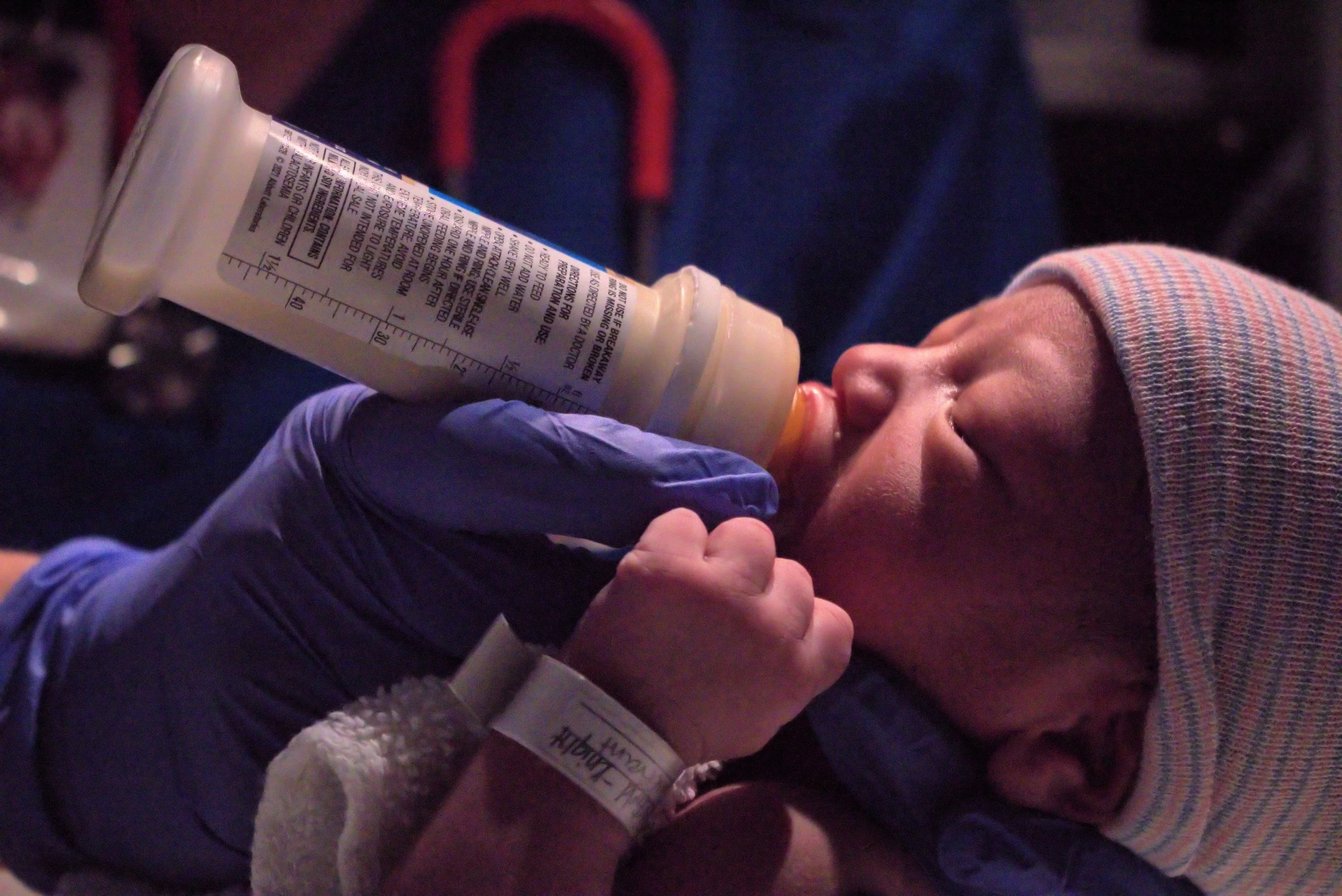
To wake a sleepy newborn for a feed, strip them down to their diaper, apply a cool washcloth to their feet, and utilize skin-to-skin contact. If a baby under two weeks old will not wake after four hours, consult your pediatrician immediately to rule out severe jaundice or low blood sugar.
It happens at 3:00 AM. Your alarm goes off. You walk to the bassinet, and your baby is completely unresponsive to your touch. Panic sets in. You gently shake their shoulder. Nothing.
This is a terrifying moment for new parents, but it is often biologically normal. Newborns are recovering from the physical trauma of birth. They sleep deeply. However, early caloric intake is not optional. You must wake them.
This guide delivers exact protocols for waking an uncooperative infant. We cover safe stimulation techniques, acceptable feeding intervals, and the critical difference between normal newborn sleep debt and medical lethargy. You will learn exactly when to let them rest and when to escalate to a medical professional.
Why Your Newborn Won't Wake Up to Feed (The Physiology of Infant Sleep)
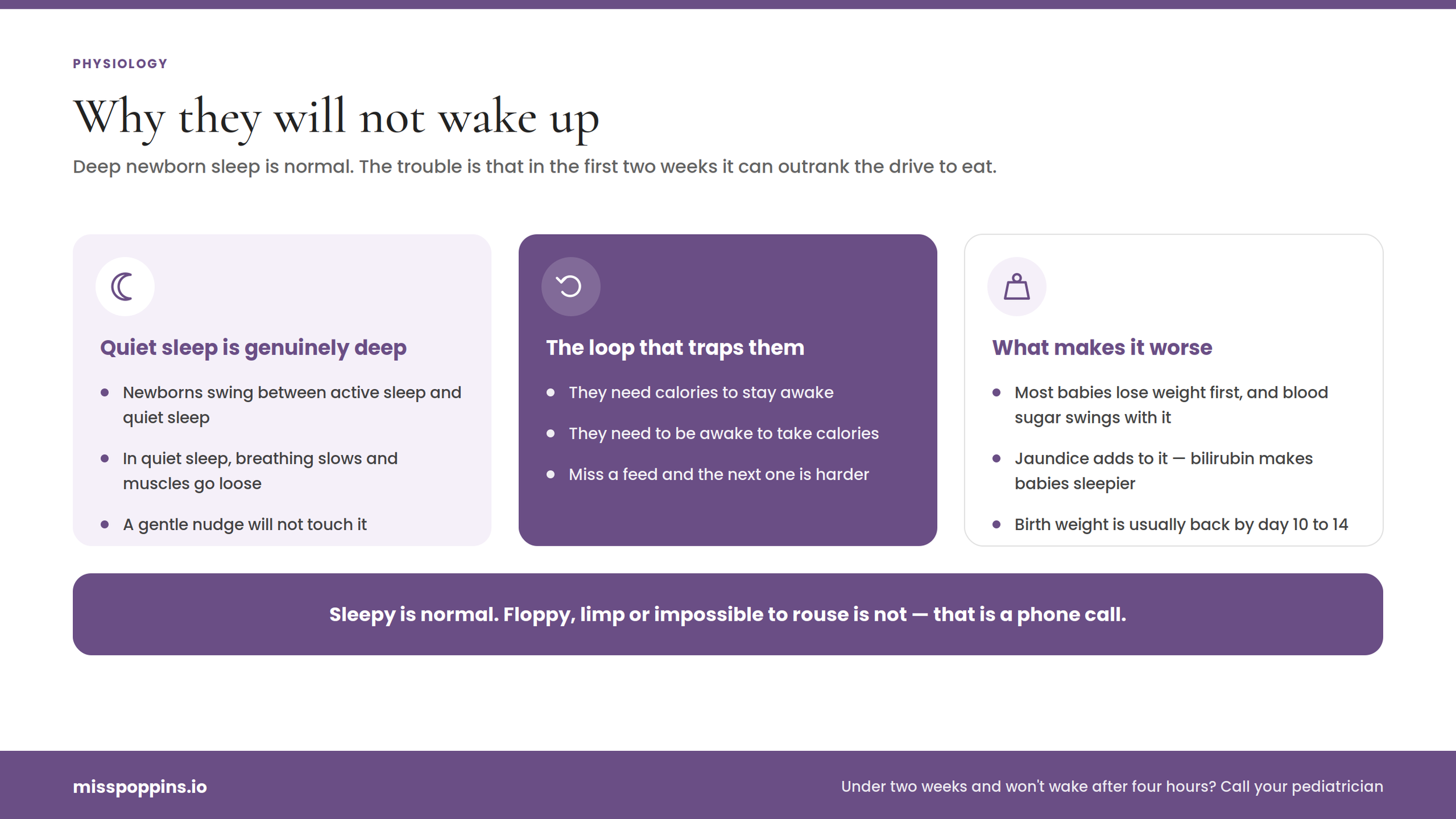
Newborn sleep does not look like adult sleep. Infants cycle rapidly between active sleep (REM) and deep, quiet sleep. During quiet sleep, their breathing slows, their muscles relax, and they become incredibly difficult to rouse.
In the first two weeks of life, a newborn's biological drive to sleep often overrides their drive to eat. This creates a dangerous loop. They need calories to stay awake, but they need to be awake to consume calories. The American Academy of Pediatrics (AAP) recommends establishing a strict feeding baseline to prevent nutritional deficits during this high-risk window.
Recognizing Lethargy vs. Normal Sleep Debt
Sleep debt accumulates quickly. A baby who cluster-fed for four hours will crash into a deep recovery sleep. This is normal.
Lethargy is different. A lethargic baby lacks the energy to eat even when aggressively stimulated. They may feel "floppy" or lack muscle tone. For a complete clinical breakdown, you must understand the process of evaluating normal sleepiness versus abnormal lethargy. If your baby is limp or unresponsive, bypass internet research and call a doctor.
The Impact of Birth Weight and Jaundice on Wakefulness
Most babies lose weight after birth. The goal is to regain that birth weight within 10 to 14 days. During this period, their blood sugar is volatile. If they skip a feed, their blood sugar drops, making them sleepier and harder to wake for the next feed.
Jaundice exacerbates this. Elevated bilirubin levels act as a sedative. A jaundiced baby will sleep through severe hunger. According to the Centers for Disease Control and Prevention (CDC), monitoring a newborn's sleepiness is a primary method for tracking jaundice severity at home.
7 Safe Stimulation Methods to Wake a Sleepy Newborn
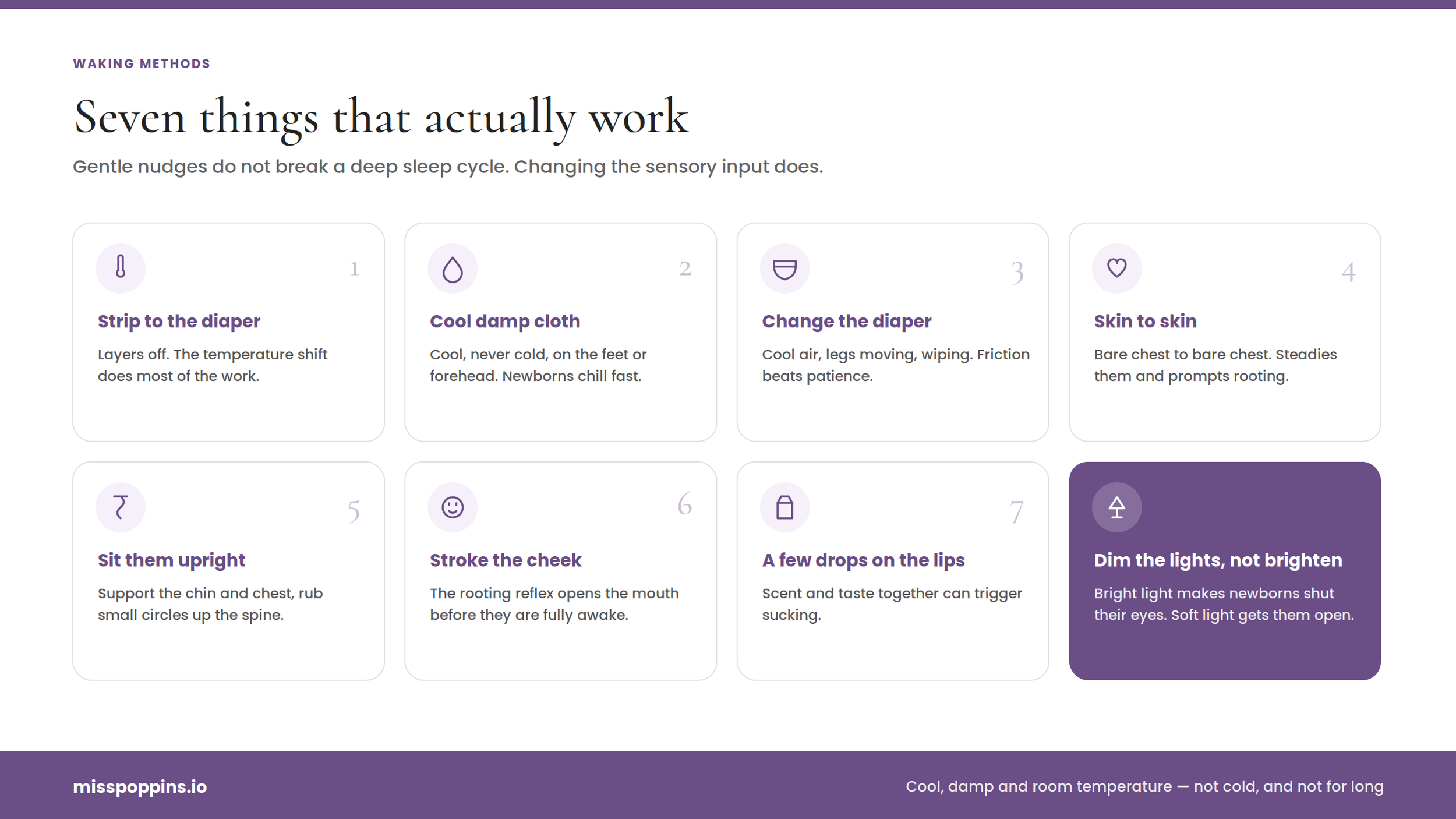
Do not rely on gentle nudges. Waking a deep-sleeping infant requires structured sensory changes. Here are the seven most effective methods:
Temperature shifts: Removing layers.
Tactile stimulation: Tickling the feet or spine.
Position changes: Lifting the baby upright.
Scent triggers: Expressing milk near their nose.
Reflex activation: Stroking the cheek.
Skin-to-skin: Regulating core temperature.
Environmental shifts: Dimming harsh lights to encourage eye opening.
The following sections break down the specific execution of these primary techniques.
Skin-to-Skin Contact (Thermoregulation Shift)
Stripping the baby down and placing them directly on your bare chest triggers primal instincts. The transfer of body heat stabilizes the infant's heart rate and often prompts a natural rooting response. We highly recommend using skin-to-skin contact to gently transition a sleepy infant to alert feeding readiness.
The Diaper Change Technique
This is the most reliable friction-first approach. When the baby will not stir, stop trying to feed them. Place them on the changing table. The cool air, the physical movement of the legs, and the wiping sensation force the nervous system to shift out of deep sleep.
Strategic Unswaddling and Cool Compresses
Warm babies sleep deeply. Do not feed a swaddled baby if you are struggling with weight gain. You must start by unswaddling the baby completely before attempting to feed. If they remain asleep, apply a damp, room-temperature washcloth to their forehead or the soles of their feet.
Triggering the Rooting Reflex (Cheek and Lip Stimulation)
Newborns possess a survival reflex called rooting. Stroke the corner of their mouth or their cheek with your finger or a nipple. This tactile cue signals the brain to open the mouth and search for food, often bypassing the need for them to be fully awake.
Upright Positioning and Spinal Support
Lying flat encourages sleep. Sit the baby up. Support their chin and chest with one hand and gently rub their spine in circular motions with the other. This physical manipulation prevents them from settling back into a sleep cycle.
Hand Expression and Scent Triggers
Express a few drops of colostrum or milk onto the baby's lips. The olfactory bulb in a newborn is highly developed. The smell of breastmilk, combined with the taste on their lips, can trigger an involuntary suckling response.
Mid-Feed Sleepiness: How to Keep Your Baby Awake at the Breast or Bottle
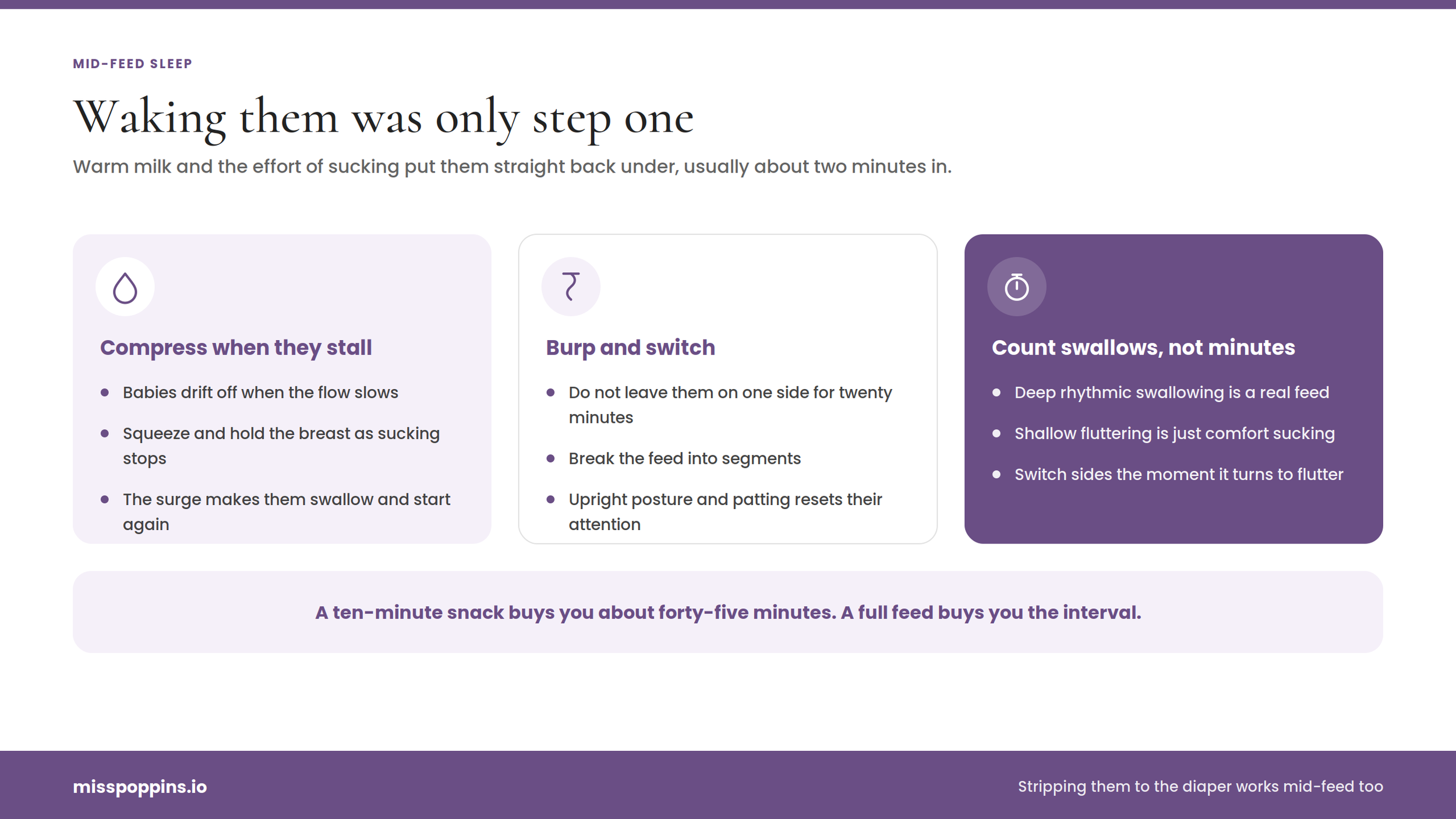
Waking the baby is only step one. The secondary point of failure occurs two minutes later. The warmth of the milk and the physical exertion of sucking puts them right back to sleep. You need strategies for keeping baby awake once they start nursing to ensure a full feed.
Breast Compression and Milk Flow Modulation
Babies fall asleep when the flow of milk slows down. To combat this, use breast compressions. Gently squeeze and hold the breast tissue when the baby stops sucking. This forces a surge of milk into their mouth, forcing them to swallow and resume active feeding.
The Mid-Feed Burp and Switch Technique
Do not let a sleepy baby stay on one side for twenty minutes. Break the feed into segments. Use upright burping between sides to naturally rouse drowsy babies. The change in posture and the physical patting will reset their attention span for the second half of the feed.
Feeding Intervals: How Often Should You Wake a Newborn?
The internet is filled with conflicting advice on scheduling. We look strictly at the numbers.
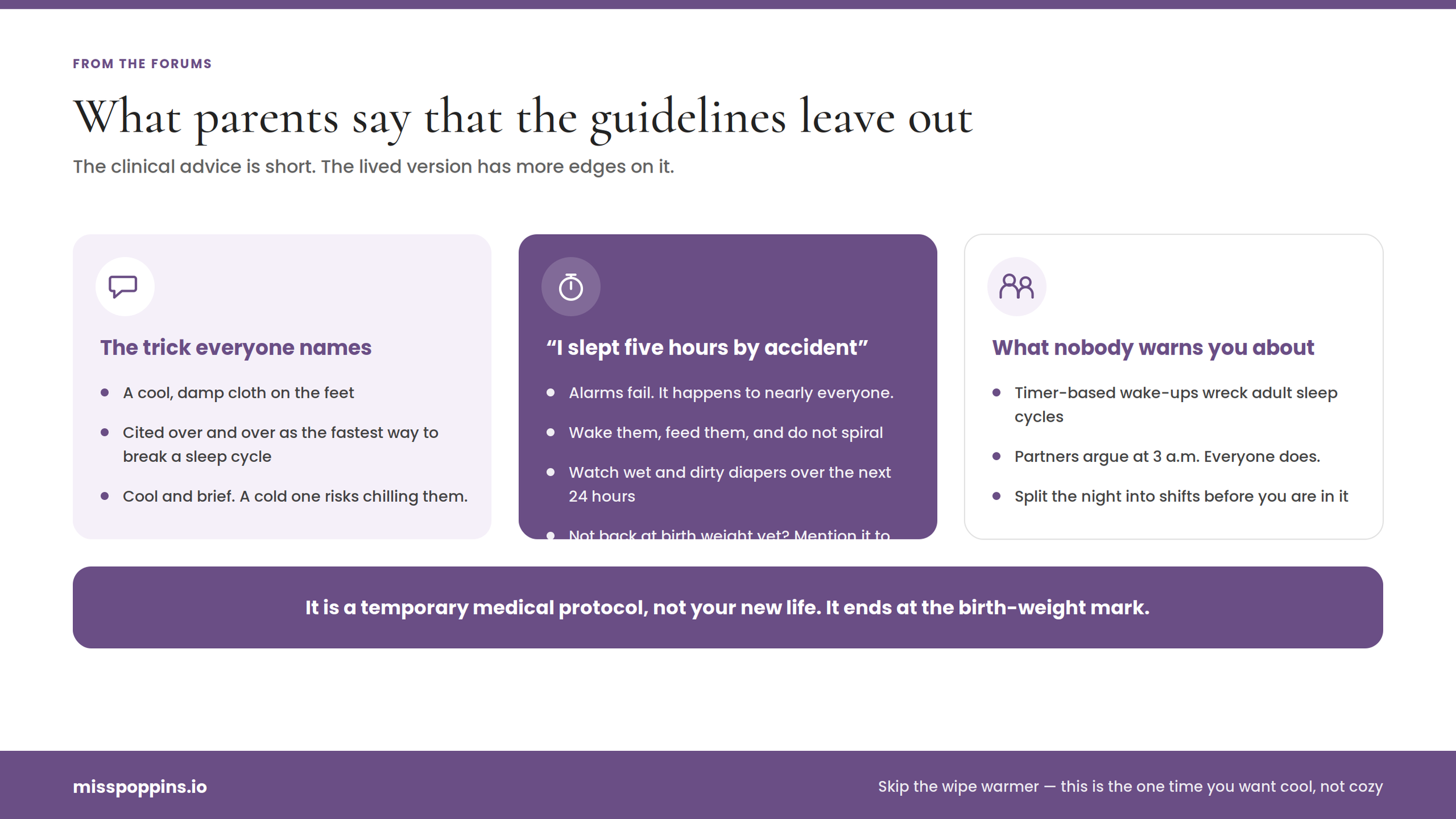
In our coaches' experience working with thousands of families, parental anxiety drops drastically once feeding intervals are treated as a temporary medical protocol rather than a permanent lifestyle change.
The 2-to-3 Hour Rule (First Weeks of Life)
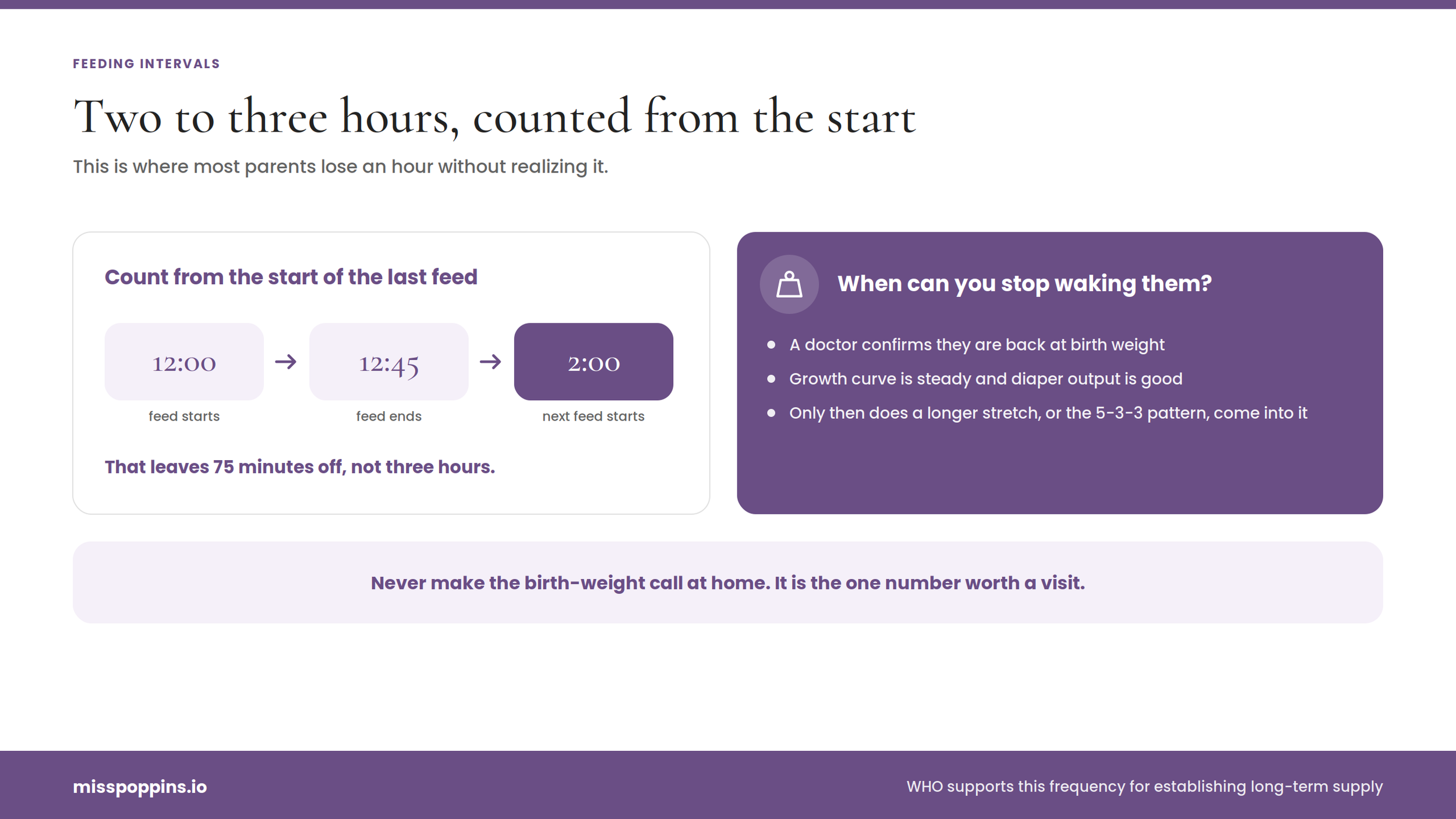
For the first two weeks, you must feed the baby every 2 to 3 hours. You calculate this interval from the start of the last feed, not the end. If a feed takes 45 minutes, you only have 75 minutes before the next one begins. Learn the general newborn feeding frequency cues to anticipate hunger before the timer goes off. The World Health Organization (WHO) supports this frequency to establish long-term milk supply.
The Birth Weight Milestone: When Can You Stop Waking Them?
This is the only metric that matters. You cannot stop waking your baby until a doctor confirms they have regained their birth weight. Never make this assumption at home. Always prioritize consulting a pediatrician about weight gain milestones before letting baby sleep past 3 hours.
Decoding the 5-3-3 Rule for Night Feeding
Once weight gain is established, many parents adopt the 5-3-3 rule. This means allowing a 5-hour stretch of sleep for the first part of the night, followed by feeds every 3 hours thereafter. Before attempting this, you must understand the mechanics by comparing deliberate waking vs. dream feeding.
Real Parent Perspectives: What the Forums and Communities Say
Medical data lacks the messy reality of parenting. When you look at communities like Reddit (r/NewParents) or TikTok, you see the actual friction points.
Parents swear by the "cold wipe on the feet" trick. It is universally cited as the fastest way to break a sleep cycle. Forums are also filled with the "I accidentally slept for 5 hours" panic post. A parent's alarm fails. They wake up terrified. The consensus from experienced parents and pediatric nurses in these threads is consistent: do not panic. Wake the baby immediately, feed them, and monitor their wet diapers closely for the next 24 hours.
The reality check is stark. Partners fight at 3:00 AM. Timer-based wake-ups destroy adult sleep cycles. This phase is an endurance test.
Differential Diagnostics for Infant Sleepiness
The following table breaks down different causes of extreme sleepiness to help you evaluate the situation objectively.

The Unit Economics of Night Feeds
Let's attack the consumerism surrounding night feeds. New parents spend heavily to solve exhaustion, often on the wrong products. Look at the customer acquisition cost (CAC) for baby gear brands targeting sleep anxiety. They sell you heated wipe warmers and heavy swaddles.
For a lethargic newborn, a wipe warmer is a terrible investment. You want the cold wipe. You want friction. Instead of buying gadgets that optimize for comfort, allocate your budget toward low-light nursery lamps that allow you to see the baby's latch without triggering their circadian daylight response, or invest in a reliable tracking app to log wet diapers and feed durations.
Sarah Jenkins, Certified Pediatric Sleep Coach at MissPoppins, states: "Parents often fear they are harming their baby by waking them up aggressively, but early caloric consistency is a biological necessity, not a choice. Skip the warming gadgets. Use a cold washcloth."
Get Expert Support Today

Navigating newborn care requires a team. You do not have to manage feeding anxiety alone.
5,000+ families supported globally
4.8-star average rating
150+ years of combined clinical and coaching experience
Fully vetted, certified coaches
Private, encrypted telehealth sessions
Explore Postpartum & Newborn Coaches / Book a Newborn Care Specialist
Explore Maternal Wellness Coaches
Download the MissPoppins app on the App Store and Google Play to connect with an expert directly from your phone.
FAQs
What do I do if my newborn won't wake for a feed?
Strip them down to their diaper, use a cool washcloth on their feet or forehead, and attempt skin-to-skin. If they are under two weeks old and refuse to wake for over 4 hours, contact your pediatrician to rule out jaundice or low blood sugar.
How long can I let my newborn sleep without feeding?
Until they regain their birth weight (usually by 2 weeks of age), do not let them sleep longer than 3 to 4 hours from the start of the last feed. Once their pediatrician confirms weight gain, they can sleep longer stretches.
I accidentally let my newborn sleep for 5 hours. What should I do?
Do not panic. Wake them up immediately and initiate a feed. Monitor their diaper output (wet and dirty diapers) over the next 24 hours. A one-off long stretch is usually fine, provided they are feeding well otherwise.
How to feed a newborn if they are sleeping?
You can attempt a "dream feed" by gently lifting them from their crib without waking them fully, stimulating the rooting reflex by brushing their lips with the nipple or bottle, and allowing them to feed in a semi-conscious state.
Can my newborn go 5 hours without eating at night?
Only if they have successfully regained their birth weight and your pediatrician has given clearance. Before this milestone, their blood sugar can drop rapidly, making 5 hours too long an interval.
When can I stop waking my newborn to feed at night?
Most pediatricians give the green light to stop waking your baby once they have regained their birth weight, are establishing a steady growth curve, and are producing adequate wet and dirty diapers.
Is it okay to let my newborn sleep 5 hours at night?
Yes, but strictly after they have cleared the birth weight milestone and demonstrate healthy daytime feeding patterns. Before that, wake them every 2 to 3 hours to ensure caloric intake.