

Is It Normal for a Newborn to Sleep With Their Mouth Open?

Occasional open-mouth sleeping in newborns is usually caused by temporary, mild nasal congestion. However, chronic open-mouth sleeping is not normal. Infants under six months are obligate nasal breathers. If a baby consistently sleeps with an open mouth when they are not congested, it strongly indicates restricted oral motor function such as a tongue-tie or weak lip competence.
Because airway mechanics and feeding mechanics are the exact same biological system, this open-mouth posture frequently leads to a shallow latch, clicking during feeds, and excessive gas.
Medical Disclaimer: This article is for educational purposes only. MissPoppins coaches provide non-clinical support. Always consult a pediatrician for medical diagnoses or if your child is in distress.
Babies are tiny, and their nasal passages are practically microscopic. According to the American Academy of Pediatrics (AAP), infants are obligate nasal breathers for the first few months of life. They have to breathe through their noses to safely coordinate sucking, swallowing, and breathing. So when you look at the bassinet and see your baby asleep with their jaw hanging wide open, your gut instinct to worry is entirely valid.
In our coaches' experience working with thousands of families, chronic mouth breathing is one of the most overlooked signs of structural feeding issues.
"Parents often blame themselves for a fussy baby who will not settle, but nine times out of ten, we are looking at an airway or feeding issue," notes Sarah Jenkins, Certified Pediatric Sleep Coach at MissPoppins. "You cannot sleep train a baby who is struggling to breathe or eat comfortably."
The Pediatrician Disconnect (Why Parents are Frustrated)
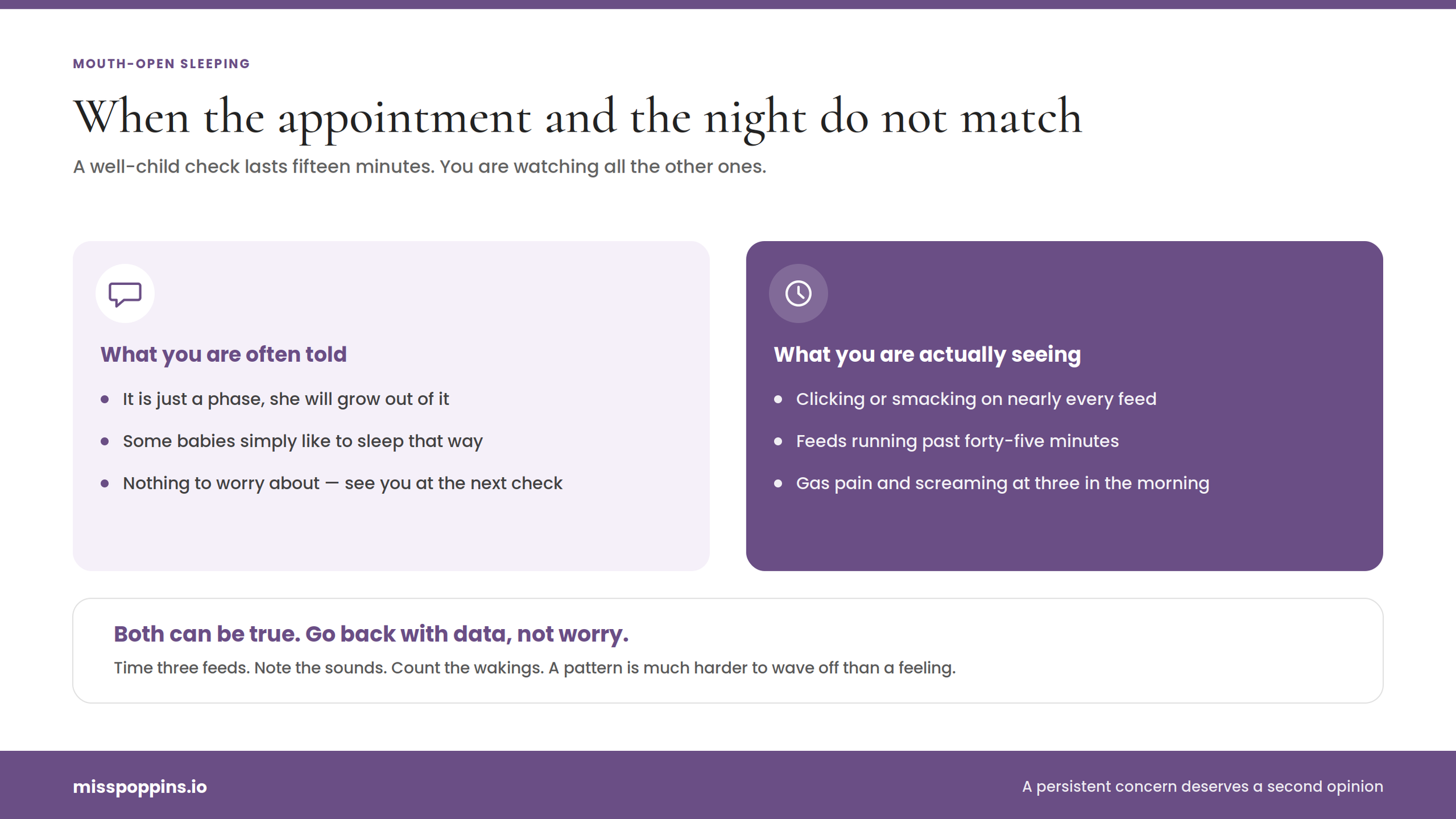
If you have already brought this up to your pediatrician, there is a high chance you were told not to worry about it. This is a massive source of frustration. You know your baby. You can feel that something is off.
The disconnect between textbook pediatrics and daily parenting is glaring online. In a massive thread on the Reddit Post: Baby’s mouth is open a lot, one mother captured the exact anxiety most parents feel when brushed off:
"My baby's mouth was always open... Paediatrician told me she just likes to have her mouth open and don't worry. Obviously I still worried..."
The community on Reddit Post: Newborn sleeping with mouth open is full of families discovering the reality that many standard well-child checks miss:
"Sleeping with the mouth open can for example be a sign of a tight tongue tie. It's not healthy for babies or grown ups to mouth breathe in the long run."
Parents on X (Twitter) echo this exact exhaustion. A recent viral post in the parenting community stated:
"Pediatrician said his open mouth sleeping is 'just a phase.' Meanwhile I’m up at 3 AM listening to him click on the bottle, gulp air, and scream from gas pain. Trust your gut, folks." View similar discussions on X
If your doctor dismissed the open mouth as a quirk, but feeding is a daily battle and you are exhausted, it is time to look at their anatomy. Start by comparing normal newborn sleep traits vs. atypical symptoms before accepting a generic answer.
Step 1: Rule Out Mild Congestion (The 95% Rule)
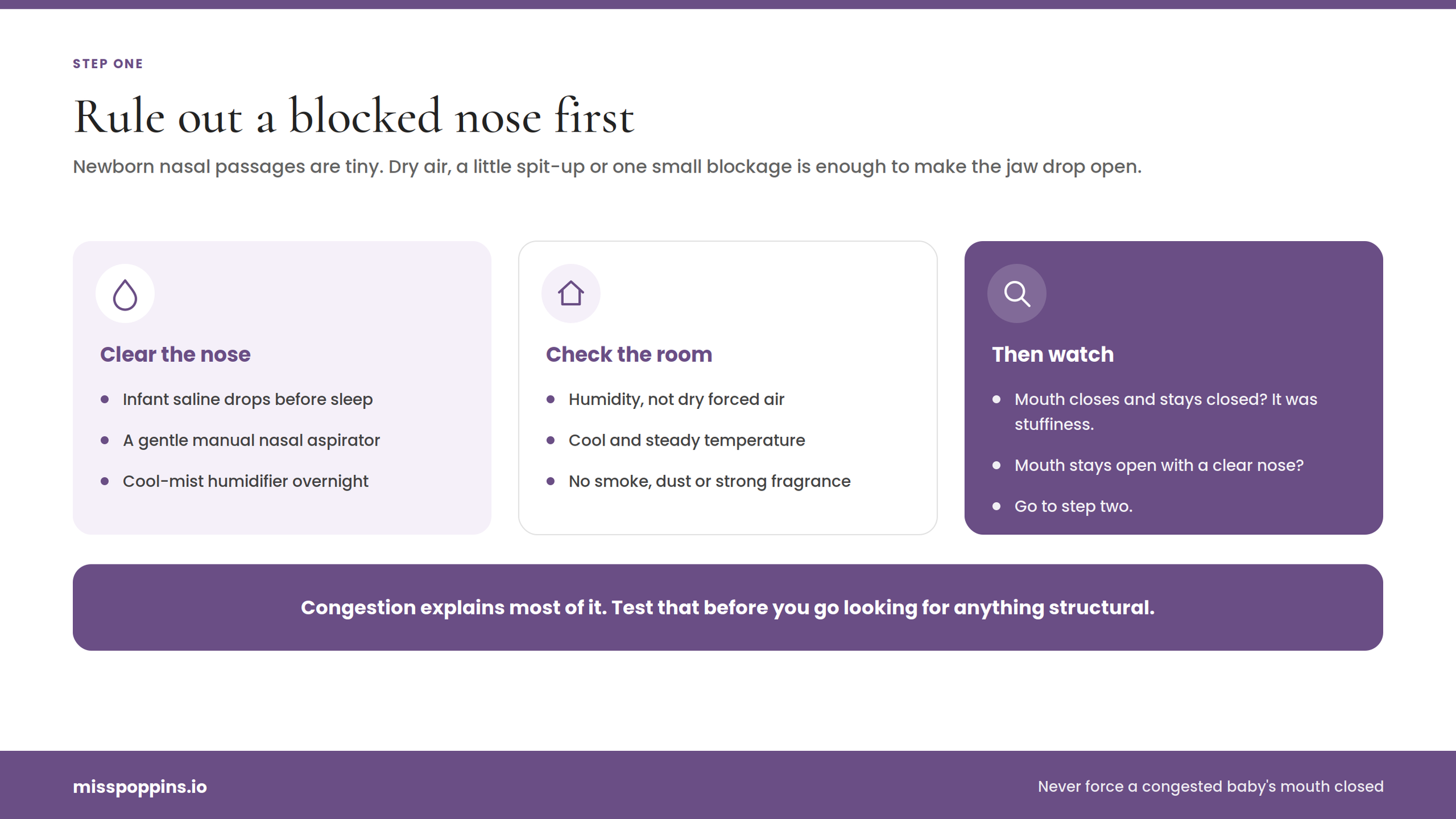
Because their nasal passages are so small, minor dry air, a tiny booger, or regular spit-up can block them entirely. When the nose is blocked, the body naturally opens the mouth to get oxygen.
The Actionable Fix: Use infant saline drops, a cool-mist humidifier, and a gentle manual nasal aspirator before sleep. Double-check your room humidity, temperature, and safe air quality for nasal passages.
The Litmus Test: Clear the nose. If the mouth closes and stays closed, it was just stuffiness. If the congestion is completely gone but the mouth stays stubbornly open, proceed to Step 2.
Step 2: The Latch Connection (Oral Motor Tone & Tongue Ties)
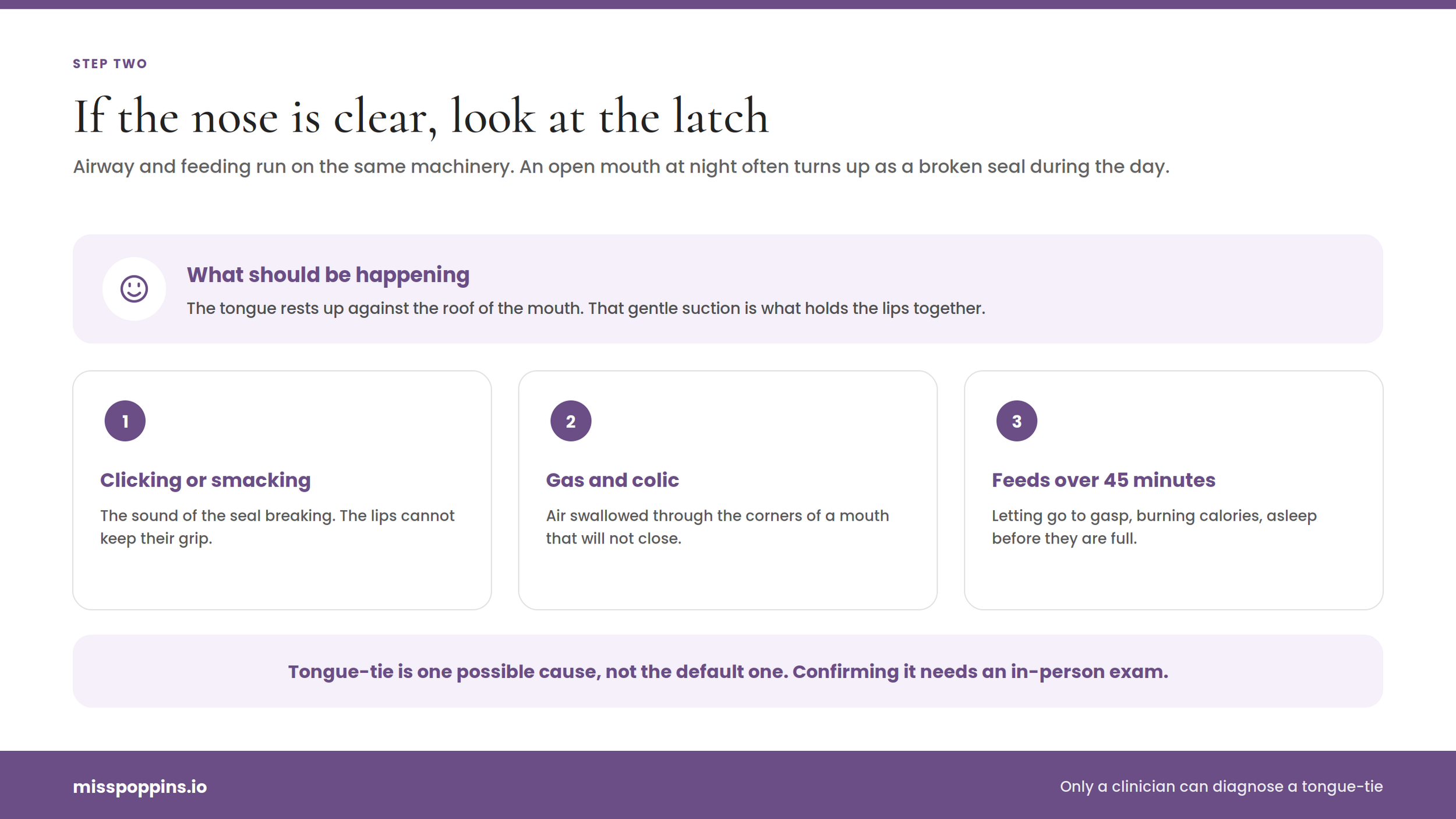
If the nose is perfectly clear but the mouth remains open, the issue is structural. A baby's tongue should naturally rest flat against the roof of their mouth. This upward suction keeps the lips closed and supports establishing safe baseline sleep patterns in weeks 1–4.
If a baby has Lip Incompetence (weak facial muscles) or a Tongue-Tie (a tight string of tissue pulling the tongue down), gravity wins. The jaw drops.
3 Signs Your Baby’s Open Mouth is Sabotaging Their Feed
Newborns must breathe through their nose to coordinate their suck-swallow-breathe reflex. Therefore, an open mouth at night almost guarantees a broken latch during the day. Look for these three red flags:
Clicking or Smacking: This is the sound of the vacuum seal breaking. The lips cannot maintain a tight grip on the breast or bottle.
Excessive Gas & Colic: They are swallowing gulps of air through the corners of an unsealed mouth.
Exhaustion (45+ Minute Feeds): The baby has to repeatedly let go of the nipple to gasp for air, burning calories and falling asleep before getting full.
Connecting these dots is vital when you are introducing a pacifier, managing palate shape, and fixing oral resting posture.
Differential Diagnosis Table: What Is Going On?
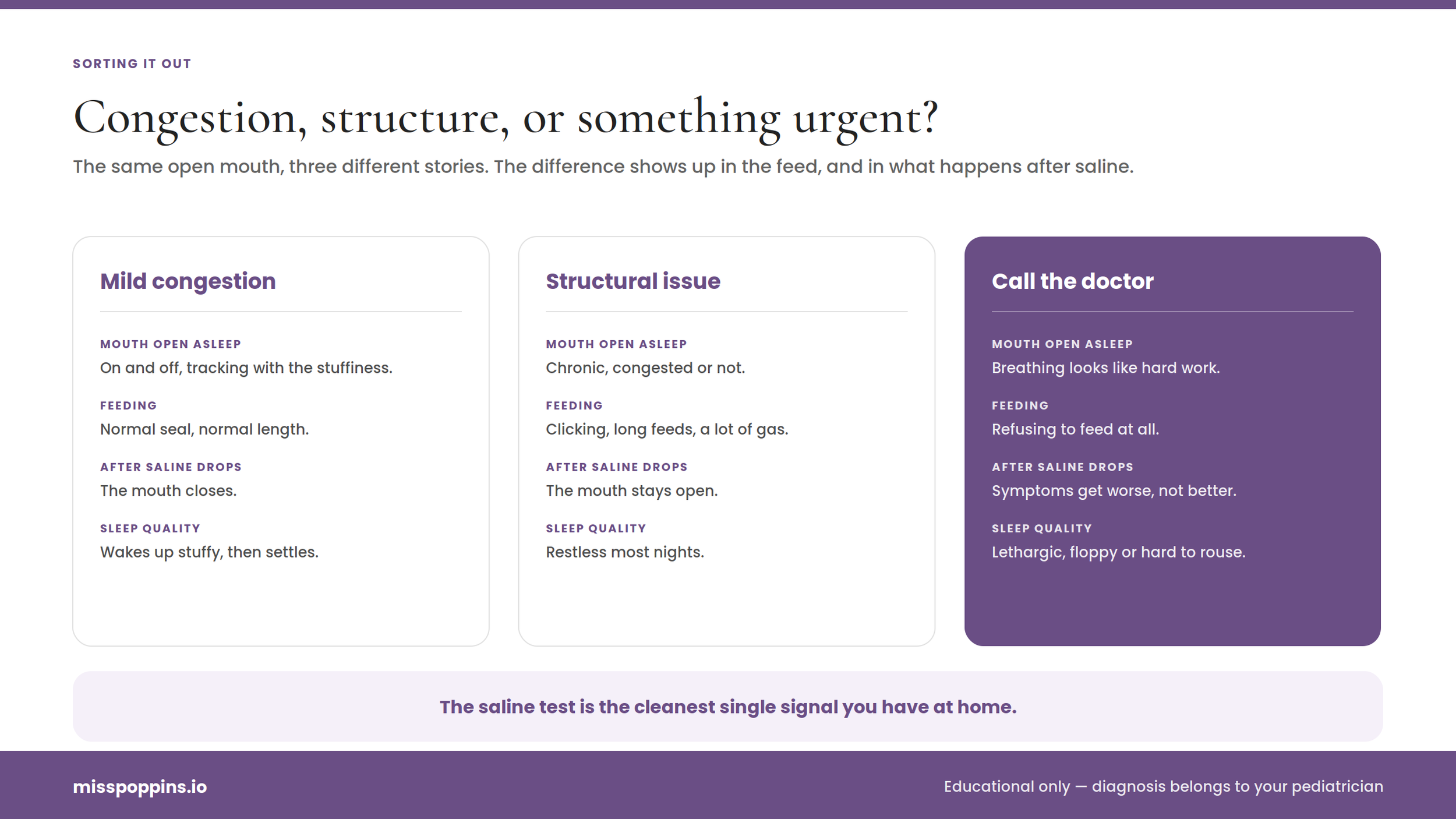
The reality of parenting is gritty. You are probably reading this on your phone in a dark room, exhausted, and silently arguing with your partner about whose turn it is to wash the pump parts. You need actual answers, not more late-night Googling.
Stop Guessing: Get a Virtual Visual Triage
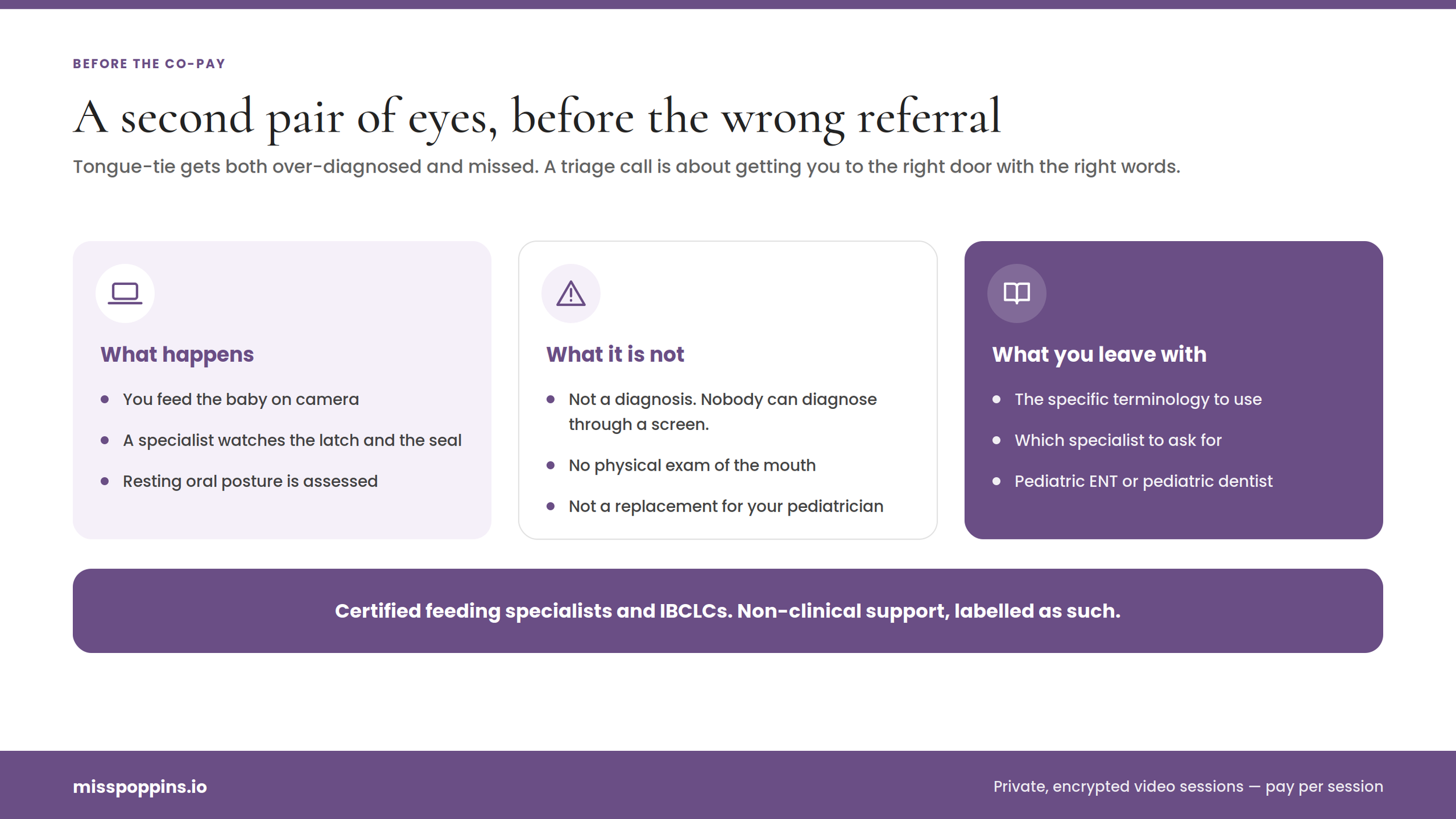
Because tongue-ties and oral motor restrictions are heavily misunderstood, you need an expert to look at your baby before you waste a co-pay at the wrong specialist. At MissPoppins, our Certified Feeding Specialists and IBCLCs cannot physically diagnose a tongue-tie through a screen. However, they can perform an Expert Virtual Visual Triage.
By watching your baby feed on camera and evaluating their resting oral posture, our coaches can spot the structural issues causing the clicking, the gas, and the open-mouth sleeping. We hand you the exact clinical terminology you need to demand the correct referral from a Pediatric ENT or Pediatric Dentist.
Explore Postpartum & Newborn Coaches
Dealing with a baby who cannot feed well will wreck your mental health. If the stress of constantly advocating for your child is causing severe burnout, you do not have to tough it out alone.
Explore Wellness & Relationships Coaches
Red Flags: When to Go to the Emergency Room
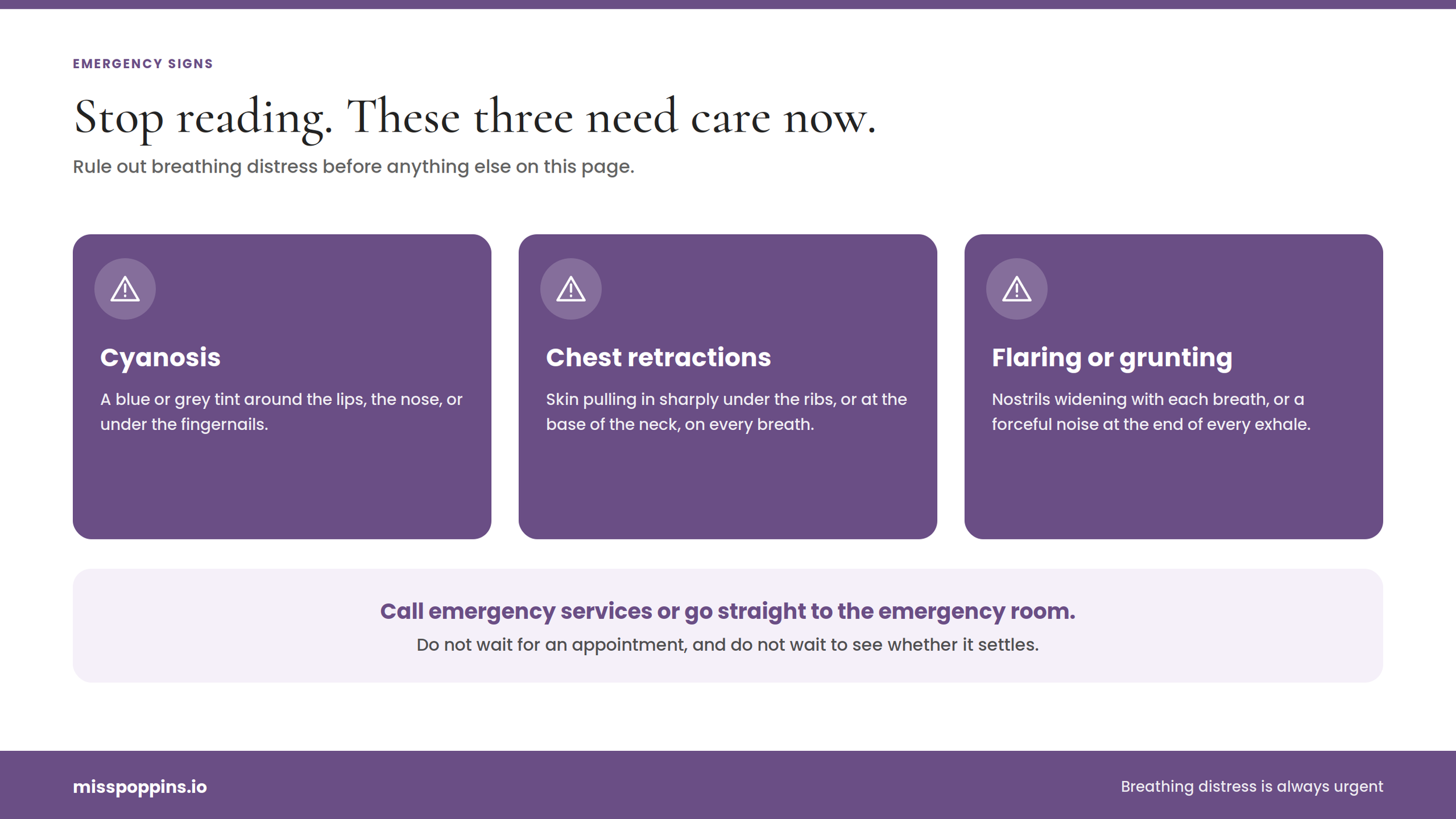
Always rule out acute respiratory distress before you worry about oral motor function. Seek immediate pediatric emergency care if the open mouth is accompanied by any of the following symptoms. If you ever have doubts about when to flag sleep breathing concerns to your pediatrician, go to the emergency room immediately:
Cyanosis: A blue or gray tint around the lips, nose, or fingernails.
Chest Retractions: Skin pulling in sharply under the ribs or at the base of the neck.
Nasal Flaring or Grunting: Widening nostrils or forceful noises at the end of each exhale.
Comprehensive Family Support at MissPoppins
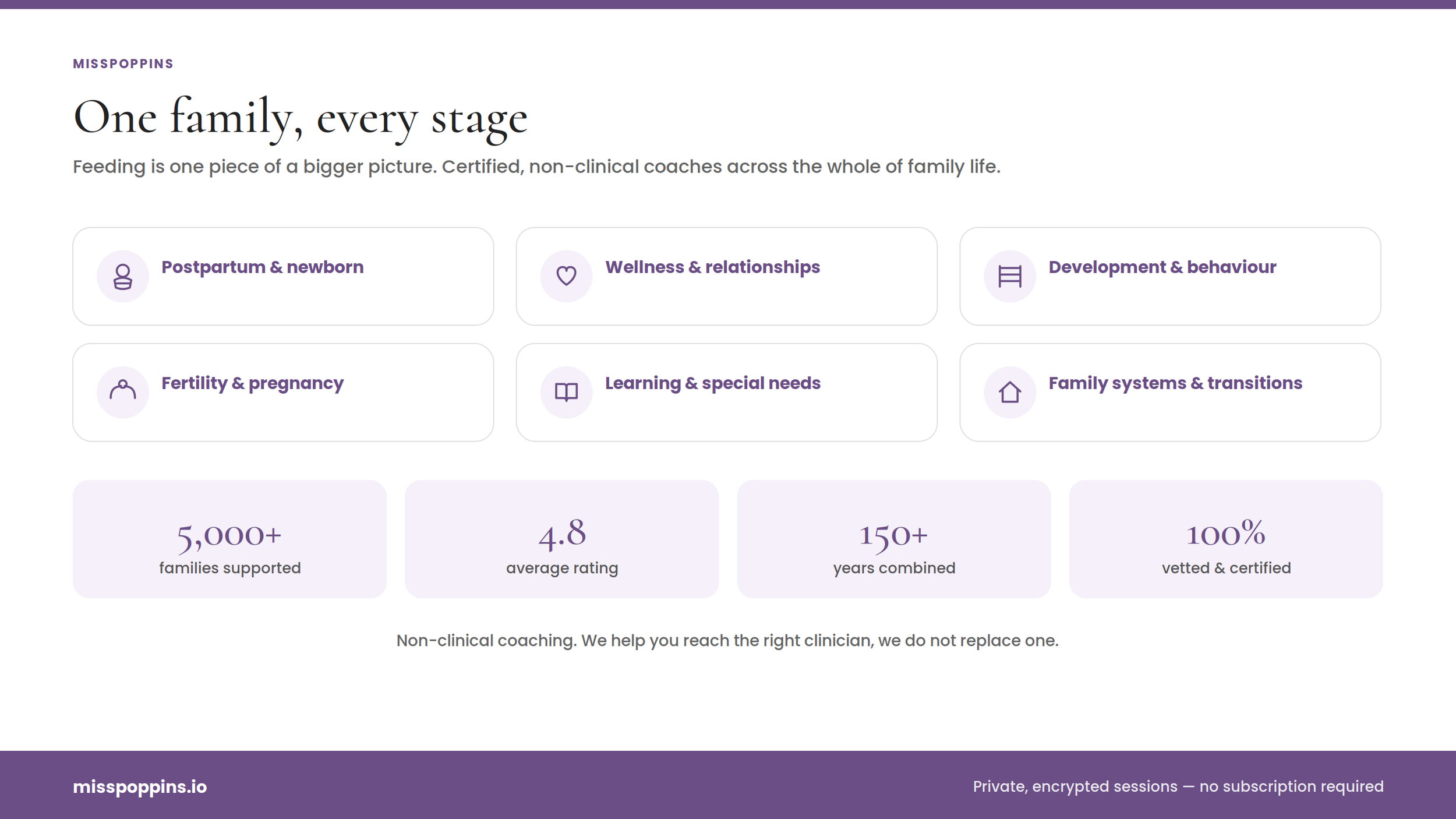
At MissPoppins, we believe that infant feeding challenges are just one part of the broader family ecosystem. When one piece is out of alignment, it affects everything else. Our platform provides holistic, virtual support for every stage of your family's journey:
Early Development & Milestones: If you are concerned that oral motor restrictions are impacting speech or physical milestones. Explore Development & Behavior Coaches
Growing Your Family: Support for preconception, IVF, and healthy pregnancies. Explore Fertility & Pregnancy Coaches
Navigating Unique Paths: Expert guidance for neurodivergence, IEPs, and specialized educational needs. Explore Learning & Special Needs Coaches
Life Changes: Managing sibling dynamics, returning to work, or moving. Explore Family Systems & Transitions Coaches
Why Families Trust MissPoppins
5,000+ families supported globally.
4.8-star average rating across all sessions.
150+ years of combined experience on our roster.
Fully vetted and certified coaches.
100% private and encrypted sessions.
Ready for real support? Download the MissPoppins app on the App Store and Google Play today.
FAQ
Can a baby sleep with their mouth open but breathe through their nose?
Yes, this is very common with tongue-ties. The baby is successfully breathing through their nasal airway, but restricted tissue or weak muscle tone prevents the jaw from staying shut.
Does mouth breathing in babies change their face shape?
Chronic, untreated mouth breathing can alter facial development over time. Because the tongue is not resting on the upper palate to expand the jaw, it can lead to a narrower palate, dental crowding, and a recessed chin later in childhood.
How do I stop my baby from sleeping with their mouth open?
Do not force the mouth closed if they are congested. If the airway is clear, a feeding specialist may recommend oral motor exercises (like "guppy pose" stretches) to strengthen the facial muscles and elevate tongue posture.
When do babies naturally start breathing through their mouths?
Babies are obligate nasal breathers until about 3 to 6 months of age. Around this time, the anatomy of their airway drops slightly, allowing them to consciously breathe through their mouths if needed. Nasal breathing remains the healthy default.
Is it normal for a baby to sleep with their mouth open after a cold?
Yes. It can take several days for residual inflammation in the nasal passages to fully clear. If the habit persists for weeks after the illness is gone, it may have become a behavioral habit requiring gentle intervention.
Can laryngomalacia cause an open mouth?
Yes. Laryngomalacia (floppy airway tissue) can make nasal breathing difficult, forcing the baby to mouth-breathe to compensate for the obstruction. This requires a physical ENT evaluation.
How can I stop my baby from opening his mouth while sleeping?
Clear the nasal passages with saline and an aspirator. If the mouth remains open, consult a feeding specialist to evaluate oral motor tone.
What are the 7 danger signs in a newborn baby?
Look out for poor feeding, lethargy, difficult breathing, fever, vomiting, convulsions, or a blue tint to the skin.
What are some signs of abnormal breathing in newborns?
Watch for flaring nostrils, grunting, or skin pulling in sharply under the ribs (retractions).