

17 Foods to Avoid While Breastfeeding: Clinical Risks vs. Common Myths

Breast milk is synthesized from your bloodstream, not your stomach. Therefore, gas-producing foods like broccoli or beans do not transfer gas to your baby. True foods to avoid while breastfeeding are limited to high-mercury fish, excessive alcohol, and specific supply-inhibiting decongestants. True food allergies require clinical diagnosis before restricting your diet.
New mothers receive a barrage of contradictory advice about their postpartum diet. You eat a salad and are told the cabbage will cause colic. You eat a cookie and are warned about dairy. The noise is constant. The biological reality is much simpler. Breast milk is made from the mother’s bloodstream. It is not made directly from her stomach contents. What causes infant gas is usually an immature digestive tract adapting to the world, not the mother's dinner.
This guide separates the 17 most debated foods into strict categories: True Clinical Dangers, Potential Supply Killers, and Debunked Cultural Myths.
The Science of Breast Milk: Why Most "Foods to Avoid" Lists are Wrong
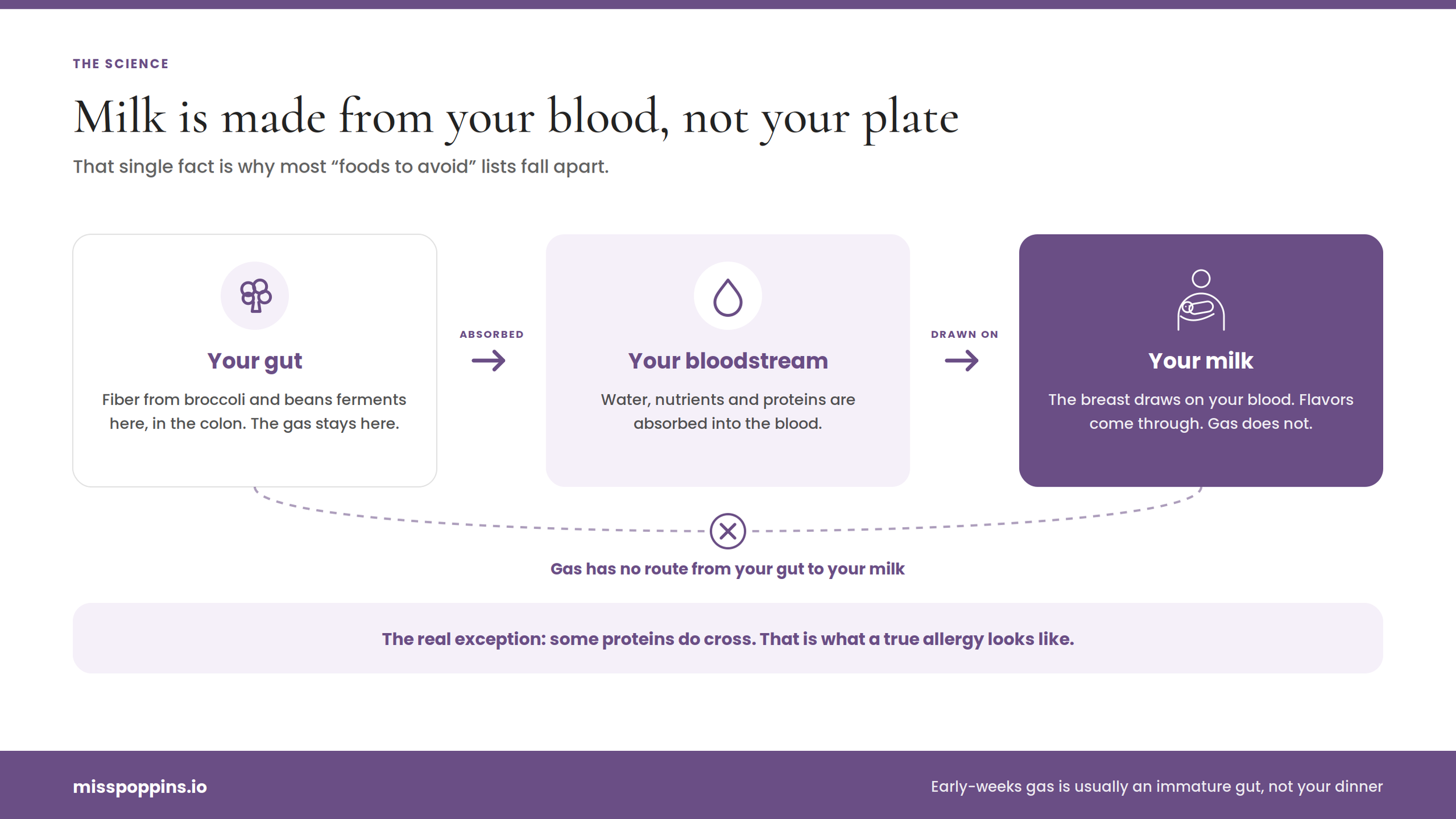
To understand maternal food restrictions during breastfeeding, you have to understand lactation physiology. Mammary glands extract water, proteins, and nutrients from the maternal blood supply to synthesize milk. They do not pull directly from the gastrointestinal tract. This is the physiological reason why gas-producing foods (like beans) do not transfer gas directly to the baby. The carbohydrates that cause you to experience gas are broken down in your large intestine. They never enter your bloodstream. Therefore, they never enter your breast milk.
A quick look at community forums reveals the scale of this misinformation. Mothers on r/breastfeeding frequently note: "Mothers are routinely told to cut out dairy, onions, and broccoli the second a baby gets gassy. But pediatricians note that weeks 6-8 are peak purple crying and gas phases, regardless of the mother's diet."
There are times to restrict your diet. True intolerances, such as Cow's Milk Protein Allergy (CMPA), occur when specific proteins do cross into the blood and into the milk. This is signaled by mucous or blood in the infant's stool. It is not signaled by normal newborn gas. understanding infant nutritional needs and feeding options requires focusing on objective clinical symptoms.
Tier 1: The Clinical Dangers (Strictly Limit or Avoid)
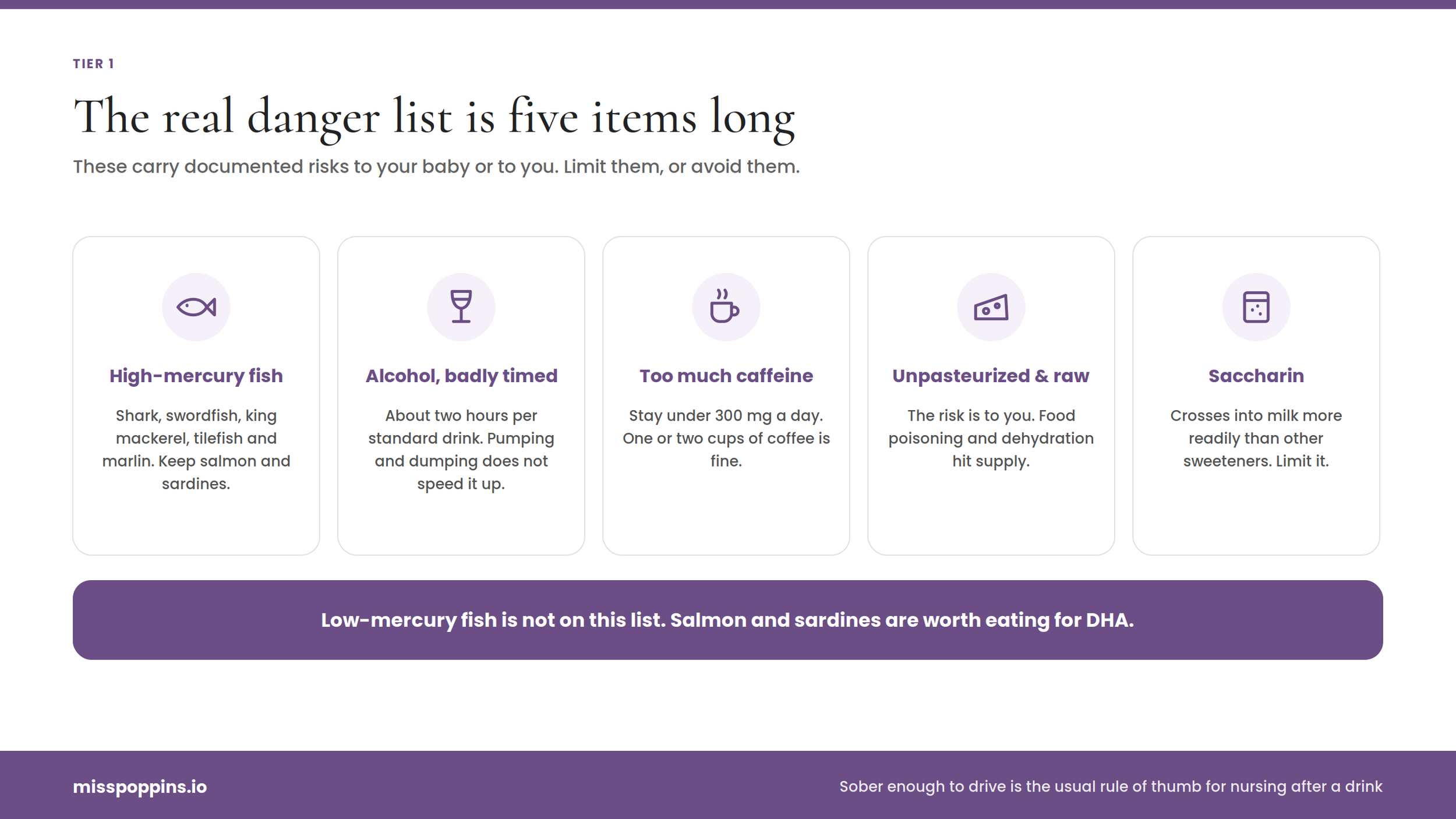
These items pose documented, physiological risks to an infant or the mother's milk supply.
1. High-Mercury Fish (Shark, Swordfish, King Mackerel, Tilefish, Marlin)
Mercury is a neurotoxin. It transfers freely through breast milk and impacts a baby's developing nervous system. The CDC guidelines on mercury exposure are explicit about avoiding these specific predatory fish. However, this does not mean you should avoid all seafood. Low-mercury fish (salmon, sardines) are critical sources of DHA. You need healthy, nutrient-dense foods to add into your postpartum diet to support infant brain development.
2. Alcohol (Without Proper Timing)
Alcohol transfers freely into breast milk. The concentration of alcohol in your milk matches the concentration in your blood. The rule is about timing, not "pumping and dumping." The AAP clinical reports on lactation suggest waiting approximately two hours per standard drink before nursing. If you are neurologically sober enough to drive a car safely, your blood alcohol level is generally low enough to nurse safely. Pumping and dumping does not extract alcohol from the milk faster. Only time lowers blood alcohol concentration.
3. Excessive Caffeine (Over 300mg)
One or two cups of coffee are perfectly fine. The issue is accumulation. Infants, especially newborns, lack the enzymes required to metabolize caffeine efficiently. When a mother consumes excessive amounts, the caffeine builds up in the infant's system. This leads to poor sleep and jitteriness. Limit intake to under 300mg per day.
4. Unpasteurized Dairy and Raw Meats (Postpartum Vulnerability)
Listeria and Salmonella do not typically transfer through breast milk. The risk here is to the mother. A severe maternal foodborne illness causes severe dehydration and physical depletion. This will drastically impact your milk supply and your physical ability to safely care for an infant. Postpartum immune systems are still recovering.
5. High-Dose Artificial Sweeteners (Saccharin)
Data on long-term infant exposure to chemical sweeteners is limited. While sucralose and aspartame transfer in very low amounts, Saccharin is known to cross into breast milk more readily. We advise a precautionary limitation. Stick to natural sweeteners or moderate sugar intake.
Tier 2: The "Supply Killers" (Herbs to Monitor)
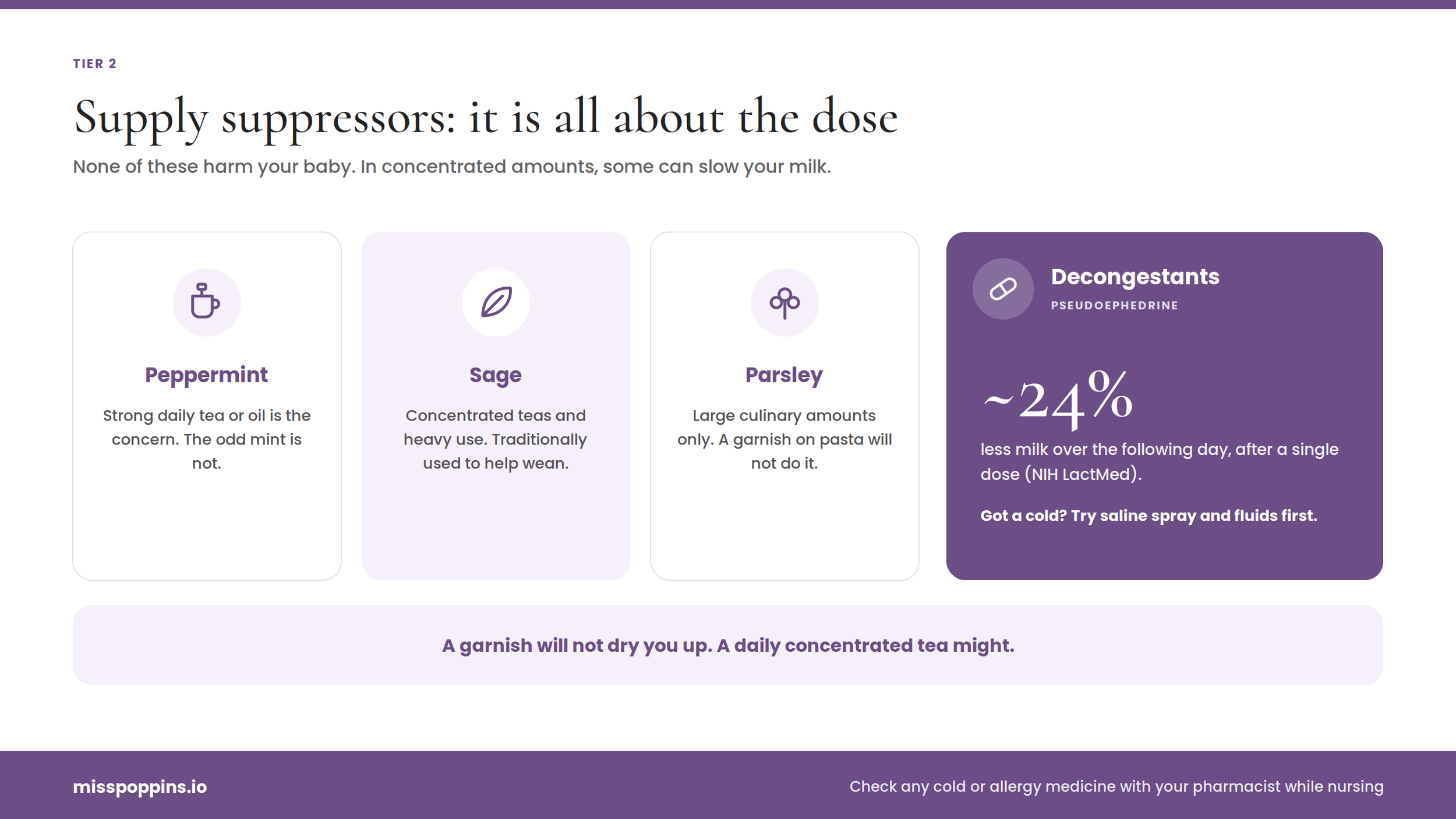
Some foods do not harm the baby but can prematurely dry up a mother's milk production.
6. Peppermint (Large Quantities)
7. Sage
8. Parsley
Context matters immensely here. A garnish of parsley on your pasta will not dry up your milk. However, concentrated medicinal teas, essential oils, or heavy culinary use (like a highly concentrated sage dressing or a constant drip of peppermint tea) are traditionally used by women to aid in weaning. If you are struggling with output, you must understand the herbs that safely support vs. those that suppress lactation and monitor your intake of the suppressants closely.
9. Menthol Cough Drops / Decongestants (Pseudoephedrine)
While not a "food," many mothers pop menthol drops or take Sudafed for a postpartum cold. Pseudoephedrine is the number one culprit for sudden, drastic milk supply drops. A single dose can reduce milk production by 24% according to data from the NIH LactMed database. If you have a cold, opt for saline sprays and hydration.
Tier 3: The Common Myths (Foods Unfairly Demonized)
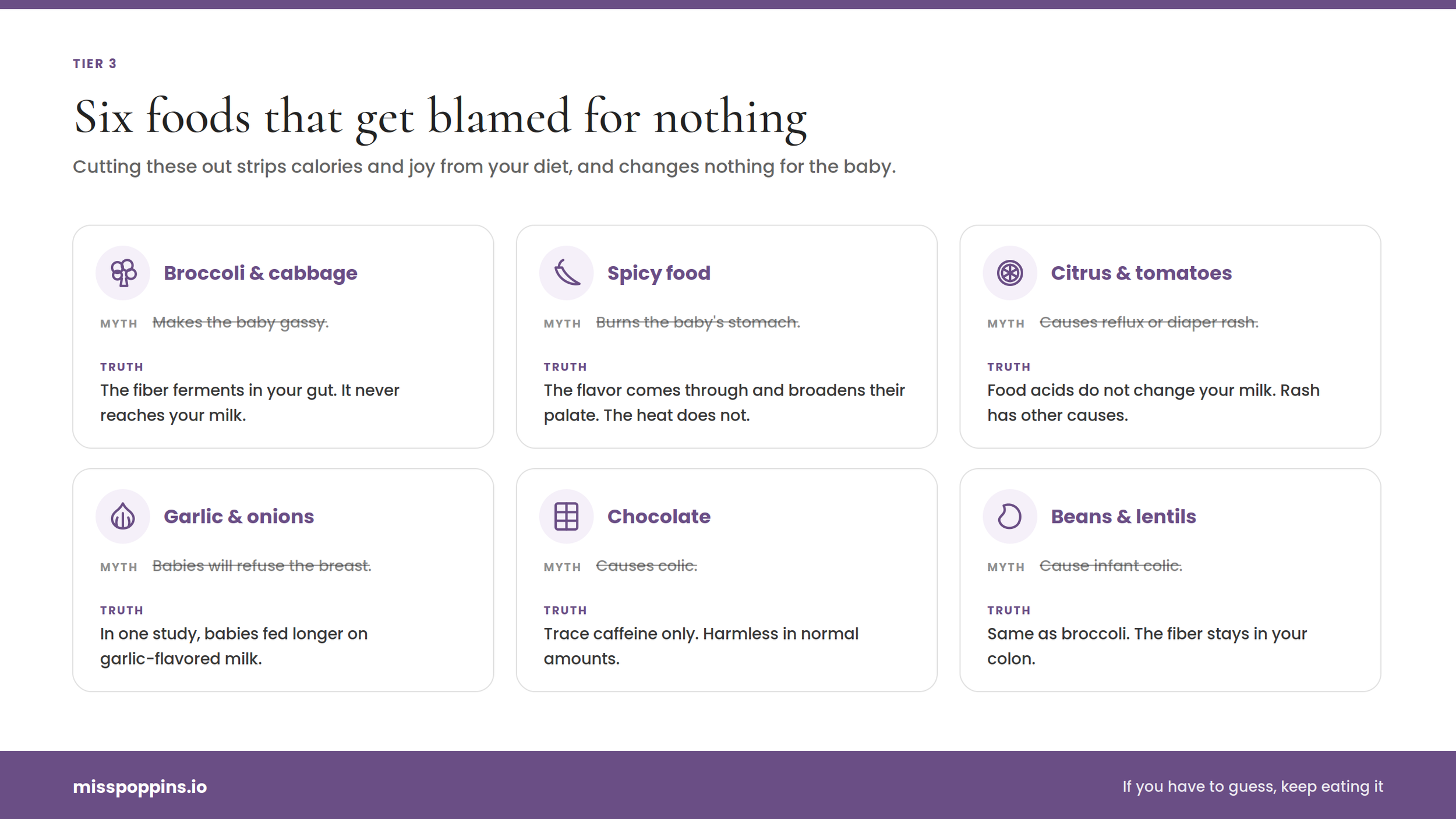
This section addresses the cultural myths that strip joy and calories from a mother's diet. These restrictions have no basis in clinical physiology.
10. Cruciferous Vegetables (Broccoli, Cabbage, Cauliflower)
The Myth: "Eating broccoli makes the baby gassy."
The Truth: The complex carbohydrates that cause you to experience gas do not enter your bloodstream. They break down locally in your gut. They cannot physically reach your breast milk.
11. Spicy Foods (Chili, Hot Sauce)
The Myth: "Spicy food burns the baby's stomach."
The Truth: Flavors do transfer into breast milk. This is actually highly beneficial for expanding your baby's palate. However, the physical "heat" compound (capsaicin) does not harm the baby's digestive tract.
12. Acidic Fruits (Citrus, Tomatoes, Strawberries)
The Myth: "Citrus causes diaper rash or acid reflux."
The Truth: Your stomach acid completely neutralizes the acidity of citrus before it ever reaches your bloodstream. Diaper rash is usually a result of contact dermatitis, a yeast issue, or normal changes in infant stool frequency.
13. Garlic and Onions
The Myth: "Strong flavors make babies reject the breast."
The Truth: Clinical studies show the exact opposite. Babies often nurse longer and more vigorously when the breast milk is naturally flavored with garlic.
14. Chocolate (In Moderation)
The Myth: "Chocolate causes colic."
The Truth: Chocolate contains trace amounts of caffeine and theobromine. Unless you are consuming it in massive, industrial quantities, it is harmless. If you want a treat, focus on galactagogue-rich snacks and treats for milk supply that might include moderate amounts of chocolate.
15. Legumes (Beans and Lentils)
The Myth: "Beans cause infant colic."
The Truth: Similar to broccoli, the fiber digests in your colon. It does not transfer to the baby. investigating whether fussiness is true colic vs. food intolerance requires looking at larger behavioral patterns, not blaming a black bean burrito.
Tier 4: The True Allergens (Only Avoid if Symptomatic)
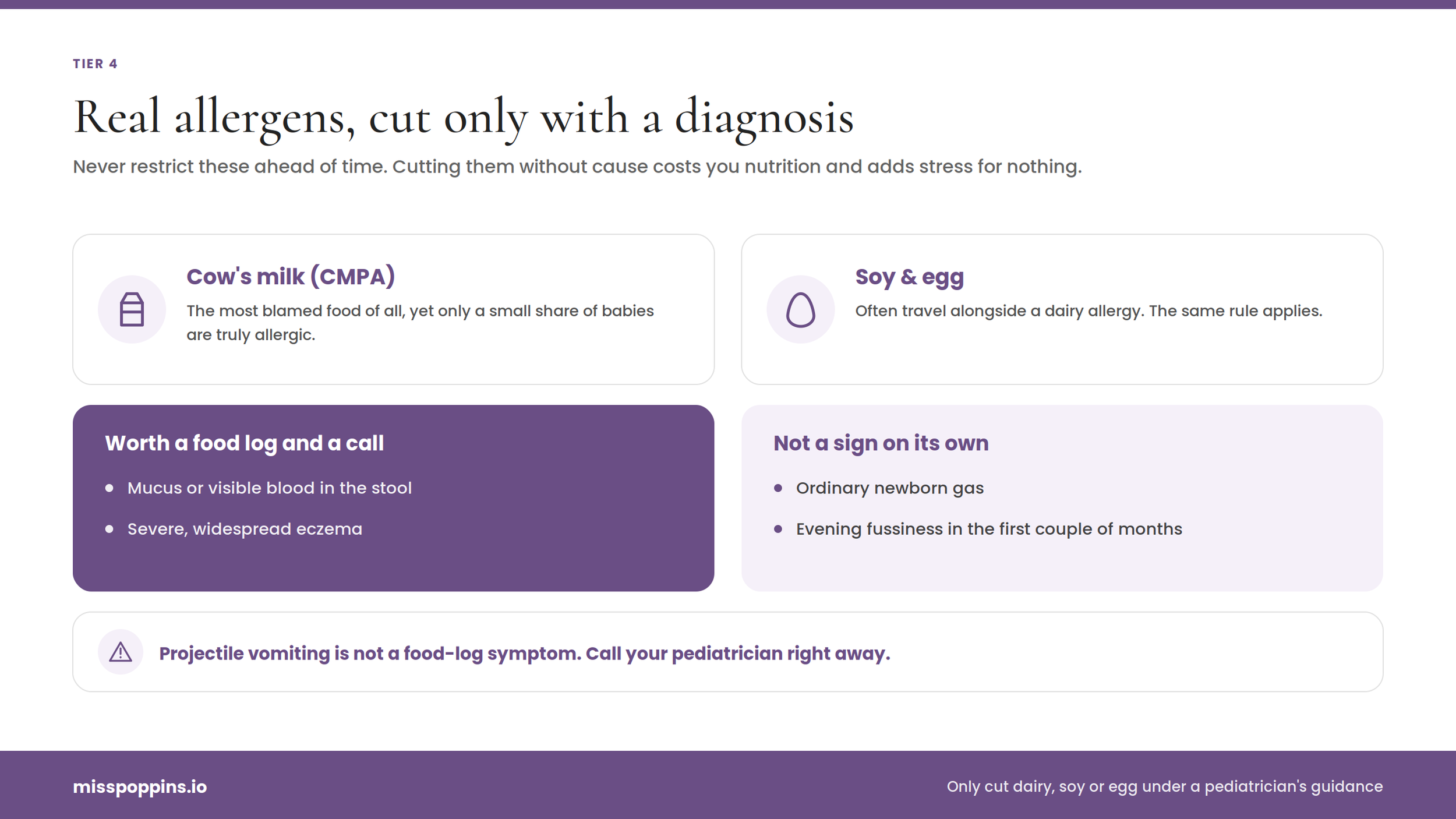
Do not restrict these foods preemptively.
16. Cow’s Milk Dairy (CMPA/CMPI)
On internet forums, dairy is the most commonly blamed food for fussy babies. The reality is that Cow's Milk Protein Allergy affects only a very small percentage of infants. Symptoms of a true allergy are severe. They include mucous or blood in the stool, severe eczema, and projectile vomiting. Normal newborn gas is not a symptom of an allergy. Never cut dairy preemptively. Only cut it under a pediatrician's direct guidance.
17. Soy and Egg Proteins
These often co-occur with a dairy intolerance. The identical rule applies. Do not restrict unless symptoms are clinically verified. Restricting your diet without medical cause depletes your maternal nutrition and drastically increases postpartum stress.
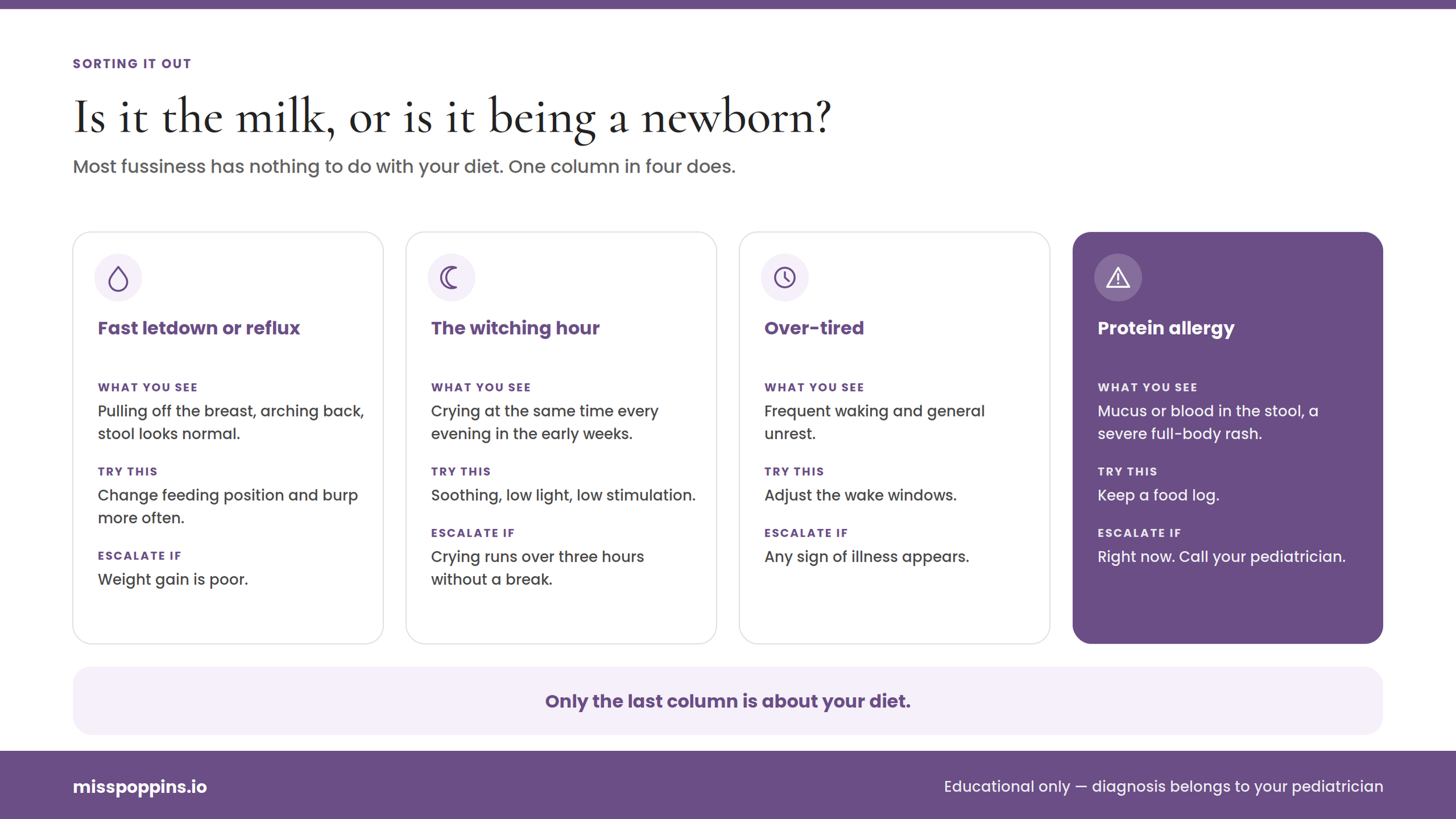
Differentiating True Intolerance from Normal Infant Behavior
Parents often mistake normal developmental stages for dietary issues. Use this matrix to assess what is actually happening.
The Verdict on Maternal Diet Restrictions
In our coaches' experience working with thousands of families, the most common cause of infant fussiness is simply an overtired baby, not a mother's diet. Postpartum caloric needs are incredibly high. Restricting your food intake based on unverified internet lists leads directly to maternal depletion, clinical anxiety, and early, unintended weaning.
Sarah Jenkins, Certified Pediatric Sleep Coach at MissPoppins, states: "When mothers stop starving themselves out of fear of causing gas, their stress levels drop. A calm, well-fed mother usually leads to a much more settled baby."
Unless you are dealing with high mercury levels, heavy alcohol consumption, or a diagnosed clinical infant allergy, you should eat a diverse, nutrient-dense diet. The reality of parenting involves daycare schedule conflicts and partner disagreements at 3:00 AM. Do not add unnecessary dietary starvation to that list. Have you ever been guilted into dropping a food from your diet, only to realize it made zero difference to your baby's fussiness?
Get Expert Support
If you are exhausted trying to decode your baby's behavior, stop guessing. A targeted plan removes the friction from postpartum recovery.
5,000+ families supported
4.8-star average rating
150+ years of combined expert experience
Fully vetted and certified coaches
Private, encrypted sessions
Book a session today to build a sustainable plan: Postpartum & Newborn Support Session or focus on parental alignment here: Development & Behavior Session.
Download the MissPoppins app on the App Store and Google Play to access your care team instantly.
FAQs
What's the worst thing to eat while breastfeeding?
The worst items are high-mercury fish (like swordfish or shark) because mercury acts as a neurotoxin. Excessive alcohol and pseudoephedrine (which severely drops milk supply) should also be strictly avoided.
What is the 5 rule for breastfeeding?
The "5 rule" often refers to breast milk storage (5 hours at room temp, 5 days in the fridge, 5 months in a deep freezer). It does not apply to maternal diet restrictions.
What foods increase breastmilk supply?
Oats, flaxseed, brewer's yeast, and dark leafy greens are traditional galactagogues. However, the most effective way to increase supply is frequent, effective milk removal and adequate maternal hydration.
Is boiled egg good for breastfeeding mothers?
Yes. Boiled eggs are an excellent, nutrient-dense source of protein and choline, which are vital for maternal recovery and infant brain development. Do not restrict eggs unless your baby has a diagnosed egg protein allergy.
What is the hardest week of breastfeeding?
Weeks three through six are typically the hardest. This period coincides with infant growth spurts, cluster feeding, and the peak of newborn fussiness, often leading mothers to incorrectly blame their diet for the baby's crying.