

How to Make Your Baby Finally Crawl
On average, babies begin to crawl around 6 to 10 months, though each child develops at their own pace. According to recent infant-development research, many babies start pushing up, rolling over, and preparing to rock on all fours during the 4–6 month period; these foundational movements lead to crawling(helpmegrowmn.org). Crawling helps with core stability, which adds up to enhanced posture, stronger hips, and a stronger lower back. Learning to crawl also sets the foundations for mobility milestones for your baby.
Early Movements That Precede Crawling
Before crawling, babies typically roll over, push up on hands and knees, and rock back and forth while on all fours. These early movements help build the strength and coordination necessary for successful crawling. (wonderbaby.org). Before learning to crawl, your baby has to develop head and neck control, core strength, shoulder stability, arm strength, leg strength, balance, and general proprioception.
Exercises & Playtime Activities to Encourage Crawling
Tummy time: Place your baby on their stomach for short supervised intervals — this strengthens neck, shoulder, and core muscles, which are critical for crawling later. (ergobaby.com)
Reach-and-grab games: Place toys just slightly out of reach during tummy time or supported sitting to motivate reaching and forward movement. Soft rattles, lightweight blocks, or colorful textured toys work well.
Obstacle practice: Use soft pillows or cushions on the floor to encourage weight shifting, climbing over gentle objects, and exploring different positions.
Knee-rocking practice: Help your baby gently rock back and forth on hands and knees to get used to the crawling motion. Knee rocking actions help your baby to organize their hip joints and target their arms and legs collaterally.
Interactive floor play: Spend time on the floor at your baby’s level and gently encourage them to move toward you or a favorite toy.
Montessori Climbing Toys for Babies
After your baby learns to crawl, you can encourage continued growth and coordination with age-appropriate Montessori toys or simple obstacle courses. Tools like the Montessori 4-in-1 Climbing Set help develop strength, balance, coordination, and the natural gross motor skills. Multiple muscle groups are also worked which help in overall strength training.Climbing is an excellent full-body workout for babies, engaging multiple muscle groups at once. As they grip and pull on climbing holds, babies strengthen their hands, forearms, biceps, and triceps, while also activating their shoulder and back muscles, including the deltoids, trapezius, and latissimus dorsi. Their core muscles, such as the abdominals and obliques, work to stabilize the trunk and maintain balance, and their lower body muscles — quadriceps, hamstrings, glutes, and calves — are used to push off surfaces and navigate the climbing structure. This combination of upper body, core, and lower body engagement not only builds strength but also improves coordination, balance, and overall body awareness, giving babyies the confidence and physical foundation for walking, running, and other milestones. (WoodandHearts, 2023)
Always supervise these activities, and ensure the toys are safe and age-appropriate.
Every child’s development path is unique, so use playtime and movement activities as gentle encouragement rather than pressure. For more personalized support or questions about baby milestones, the MissPoppins app connects you with child-development experts who can guide your baby’s milestone journey.
What Is an Occupational Therapist for Babies?
An occupational therapist (OT) for babies is a professional who helps infants develop the skills needed for daily activities and overall growth. For young children, this often includes supporting fine and gross motor skills, sensory processing, and coordination. OTs work with babies who may be experiencing delays in crawling, reaching, grasping, or other milestones. They use play-based activities and guided exercises to strengthen muscles, improve posture and balance, and teach new ways to explore their environment safely. For example, an OT might suggest specific reach-and-grab games, guided tummy time techniques, or obstacle activities tailored to the baby’s current abilities. Working with an occupational therapist can provide peace of mind for parents while helping babies reach milestones confidently and safely.
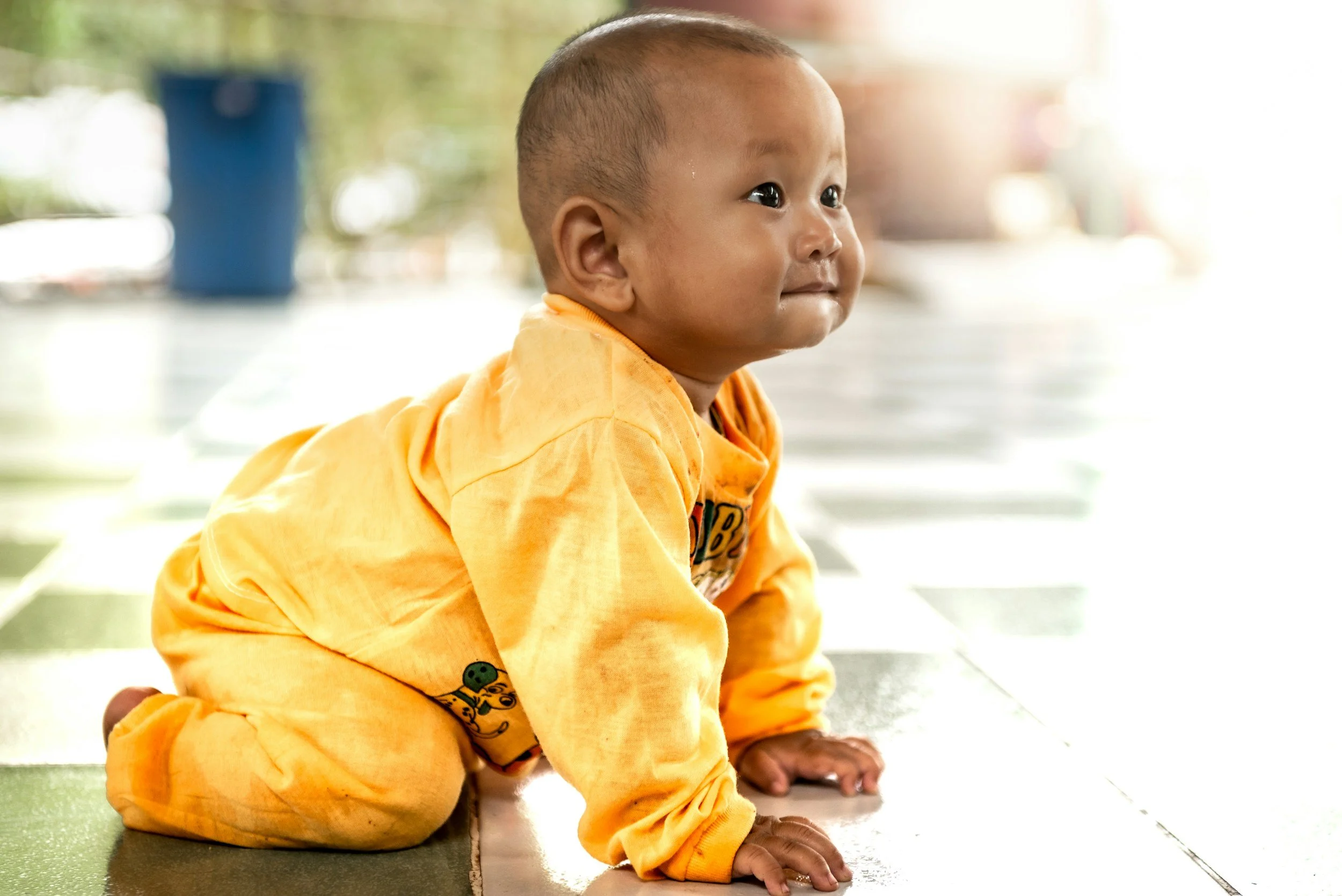
Baby Crawling