

Why Your Child Won’t Tell You About Their Day
We’re all familiar with the conversation that happens after school pickup.
“How was your day?”
“Good.”
And that’s it. Speaking to your child feels like speaking to a wall.
This brief exchange can feel confusing, frustrating, or even concerning, especially when you genuinely want to connect with your child and understand their emotional world. While it may seem like your child is avoiding conversation, the reality is nuanced.
Many parents struggle not because their child can’t communicate but because the conditions that support communication haven’t been fully nurtured yet. Communication is something people see as a vocal developmental milestones, but not something that has to be socialized at a young age.
Why Kids Shut Down After School
Children don’t always process their day in the same linear way adults do. After hours of stimulation, social interaction, rules, and transitions, many kids are simply exhausted. If a child feels like giving more details to their parent feels like exhaustion instead of relief, it is likely they will create a stump.
Parent coach and former day home manager Rhonda Tkachuk explains that children often need context before they can open up. As she shared on the MissPoppins Podcast:
“Sometimes I think they need the caregiver that has been engaged with them all day to even give them a little bit of a hint like, ‘remember when we went outside today, what did you do outside?’ And then the child’s like, ‘wow, I climbed the slide and then I did this.’”
When parents rely on broad questions like “How was your day?”, children may not know where to start or may default to the simplest possible answer.
The Real Barriers to Communication
1. Overly Broad Questions
Young children think in experiences, not summaries. Without specific prompts, they may struggle to recall or articulate their day.
2. Emotional Fatigue
After a full day of regulating behavior and emotions, many children need time to decompress before talking.
3. Lack of Reflective Experiences
If a child hasn’t had meaningful play, interaction, or storytelling opportunities during the day, there’s less for them to reflect on later. In a school setting, this can look like an art activity or group play moment that gives them something tangible and exciting to share with you.
Rhonda emphasizes that communication is often tied to process, not outcomes.
“It’s not always about that product. It’s about the process.”
— Rhonda, MissPoppins Podcast
When children engage in open-ended play and meaningful interactions, they’re far more likely to talk about them later. As a parent, it is also your role to be attentive to the stories they tell and what those activities mean to them. Often, after repeated dismissive responses, children naturally begin to shy away and turn their emotions inward. Feeling misunderstood, or simply unheard in these small moments can unknowingly compound over time.
You don’t want your child to think you only care to speak when its something you want to speak about. These engagements reflect the emotional availability of their parents.
How to Raise a Socially Adaptable Child
Social adaptability doesn’t come from forcing conversation; it comes from environments that support emotional safety, curiosity, and play. A socialized child is better equipped to navigate feelings of insecurity in group settings.
Rhonda explains that children develop socially through layered experiences:
“Understanding play doesn’t just instantly happen. It is a process… moving from solitary play, to parallel play, to cooperative play.”
— Rhonda, MissPoppins Podcast
These stages of play help children:
Learn perspective-taking
Build emotional language
Gain confidence expressing experiences
Analyzing the peer environment and compatibility before enrolling your child in certain settings can make a meaningful difference.
Consider Day Homes for Early Childhood Development
According to Rhonda, day homes offer a unique advantage when it comes to fostering communication and emotional development.
As she shared on the MissPoppins Podcast:
“The consistency of having the same caregiver in a day home was huge for me, knowing that that caregiver is going to be with them from the minute they’re dropped off to when they get picked up.”
This consistency allows caregivers to:
Observe emotional patterns
Prompt children with specific memories
Share meaningful context with parents
She also highlights the importance of caregiver–parent communication:
“Open communication is a must… being able to really discuss child development with wherever you choose to place your child.”
It is not enough to simply drop off your child at these establishments. To fully reap the benefits of day homes, schooling programs, and similar sorts, parents should stay in touch with program managers and remain informed about daily activities and developmental goals.
How Parents Can Encourage Better Conversations at Home
Instead of asking “How was your day?”, try more specific and approachable phrases:
“Who did you sit next to today?”
“What made you laugh?”
“What did you play outside?”
These questions mirror the prompts children already receive in nurturing care environments.
“When you elaborate more and dig based on an experience they had that day, the child will repeat what they’ve done, and it comes from the child’s perspective.”
A Child’s Environment Is Primordial
Not all schools, day homes, after-school programs, or summer camps are created equal. Rhonda brings over 20 years of experience identifying and supporting day homes that foster early childhood development—both cognitively and socially through intentional daily activities and ongoing peer interaction.
If your child is not comfortable or well-adapted to their environment, it can create emotional restraint that impacts your relationship over time.
Experts like Rhonda, through years of hands-on experience, work alongside parents to support their child’s developmental goals. This often includes evaluating peer environments, administrative operations, and activity planning to ensure children feel safe, seen, and supported.
Rhonda is a certified parent coach and early childhood expert with over 20 years of experience in child development and caregiving environments. A former day home manager, she has spent her career helping families and childcare programs build strong communication skills, emotional adaptability, and social confidence in children through intentional play, daily routines, and reflective interaction. Rhonda also works directly with parents to evaluate peer environments and developmental support systems to ensure the best fit for each child.
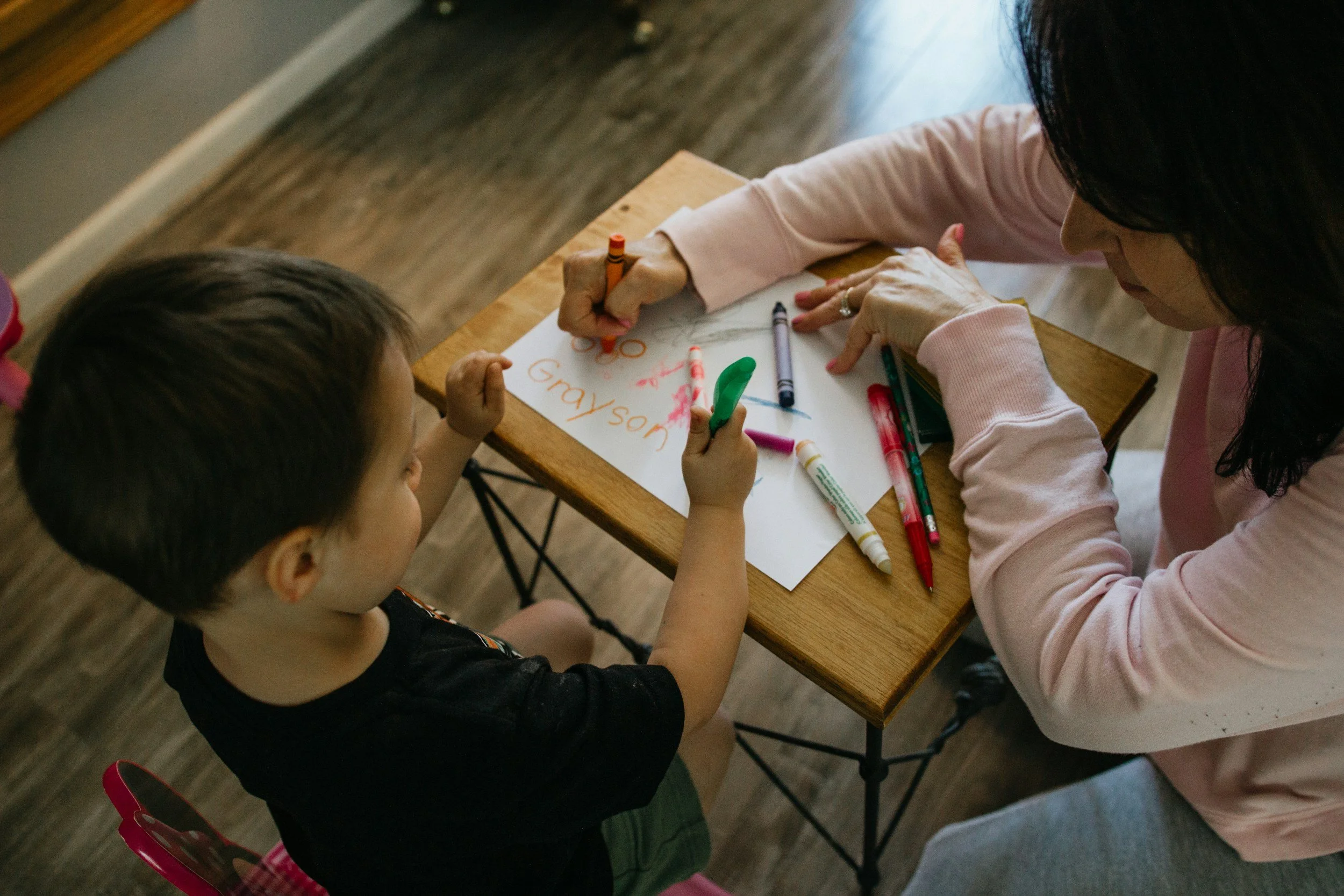
Caregiver helping a child/student with activities.