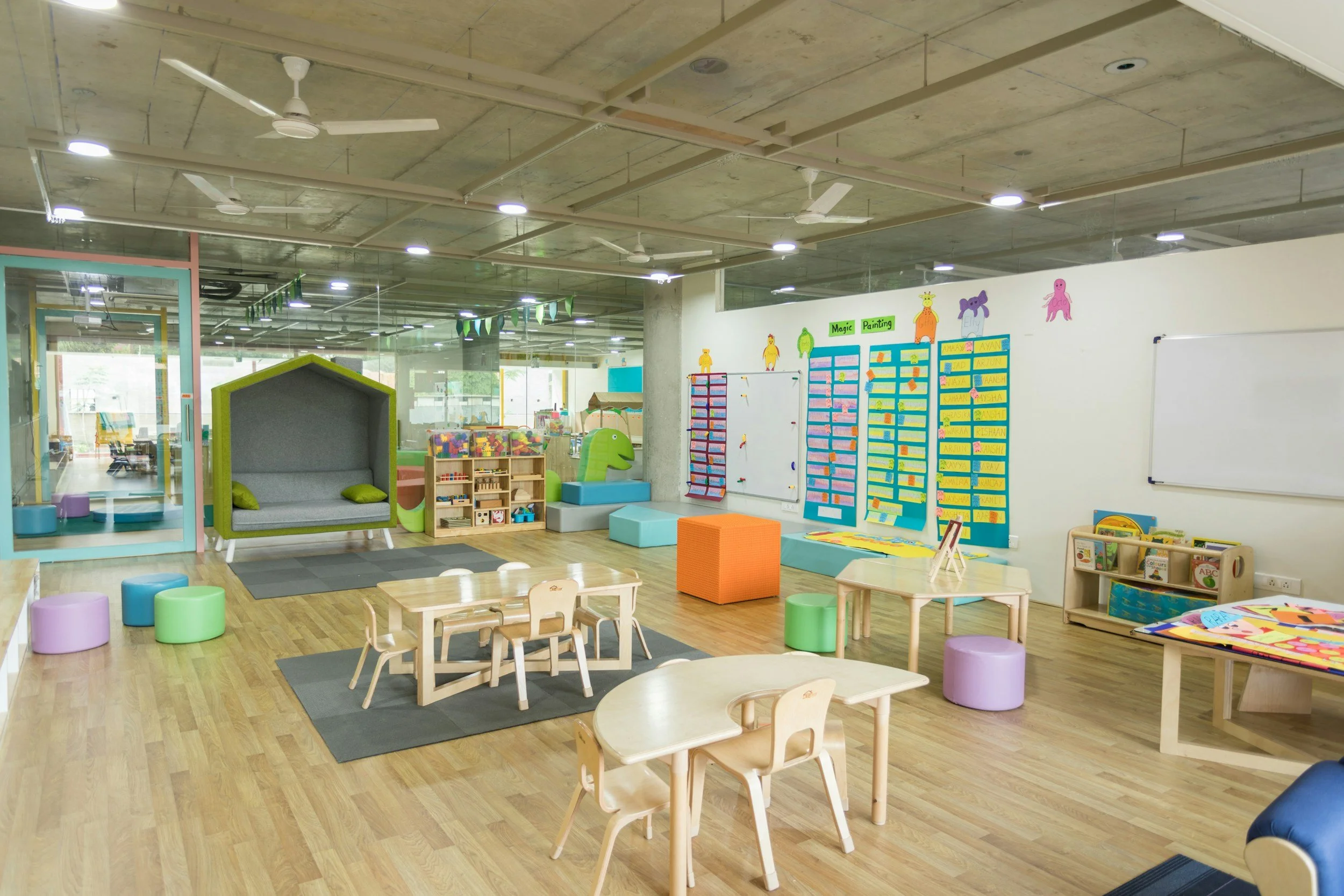
Signs of a Great Day Care
How Do You Pick the Right Day Care?
There are definitely things you should evaluate when choosing an in-home daycare. The daycare that you use will become a fertile ground for your child’s early years of social and environmental behavior development. This is the space where your child begins learning how to communicate, interact with peers, manage emotions, and respond to authority outside the home.
What goes into choosing the right daycare establishment for your child is multifaceted. A conversation with Rhonda Tkachuk, MEd (Early Childhood Education), BCR, Dip. ECE, Parent Coach & Former Day Home Manager with over 20 years of experience, revealed several important things parents should look for when evaluating in-home daycare options.
What to Look For When Choosing the Right Daycare (Avoid Red Flags)
Based on Rhonda’s unique experience running, licensing, and working within day homes, parents should pay close attention to:
Consistency of the caregiver
Rhonda emphasizes that children benefit from having the same caregiver throughout the day rather than rotating staff. As she explains on the MissPoppins Podcast:
“The consistency of having the same caregiver in a day home was huge for me, knowing that that caregiver is going to be with them from the minute they’re dropped off to when they get picked up.”
Low staff turnover
This is true across most industries; but always consider if the daycare has a high turnover rate. High turnover can be one of the biggest red flags. Children rely heavily on familiarity and routine, and frequent changes can disrupt emotional safety and attachment.
Cleanliness!
Another standard procedure. Although this is common sense, try to look for certifications or inspection approvals. It is often said that a room reflects what is in the mind of the owner; so make sure the room reflects values of organization, peace, cleanliness, and professionalism.
Ensure proper licensing and regulation
Licensing a childcare environment is not a casual process, and Rhonda makes clear that it is designed to protect children and families. Properly licensed day homes must meet set regulations, including defined caregiver-to-child ratios, age limits, and safety standards, noting that providers are only “allowed so many children under two, so many under three.” Licensing also involves evaluating the caregiver’s training and understanding of child development. Beyond compliance, the licensing structure creates accountability, transparency, and a nurturing environment where parents can feel confident asking questions and staying involved in the process.
Open communication with parents
Parents should feel welcome to ask questions and understand what their child is doing throughout the day. “Open communication is a must… being able to really discuss child development with wherever you choose to place your child.”
Activities that are performed in these day cares should be fruitful to their development. It is highly advised to ask questions as a parent about what their daily activities were. Asking your child specific questions about their day or simply hearing their stories can help foster better communication. We explore this connection between childcare environments and communication in our article: Why Won’t My Child Talk to Me?
Supportive transitions and drop-off practices
A quality daycare understands that separation can be difficult for both children and parents. For kids who are fussier about their attachment styles, Rhonda recommends increasing the drop off time at a gradual rate. If your child is uncomfortable spending 8 hours in a care center, considering starting with 2, then 3, and so on.
Developmentally appropriate play
Activities should focus on engagement and exploration rather than just finished products.
“It’s not always about that product. It’s about the process.”
When children are placed in environments that prioritize process-based play and emotional safety, they are more likely to feel comfortable expressing themselves later at home.
Signs of a Great Daycare Include:
A caregiver who is actively engaged during pick-ups and drop-offs
Children who can settle in shortly and are lively, socially adept, and secure
Leaders who can offer clear explanations of daily activities, goals, and meaningful progress reports
Opportunities for outdoor play and peer interaction that can develop social skills
Parents feeling reassured in the experience of the program supervisors
As Rhonda explains from her own experience working with families:
“Nobody wants to go to work and worry about their child all day. My goal was always that parents could leave knowing their child was settled, engaged, and cared for.”
In-Home Daycare or Regular Daycare?
The difference between an in-home daycare and a traditional daycare center often comes down to consistency, scale, and how closely caregivers can track a child’s day-to-day development. On the MissPoppins Podcast, Rhonda explains that in a day home, the caregiver is typically more present, especially during pick-ups and drop-offs. This allows for a deeper understanding of each child’s needs: “The consistency of having the same caregiver in a day home was huge for me, knowing that that caregiver is going to be with them from the minute they’re dropped off to when they get picked up.”
In contrast, daycare centers often operate on rotating shifts, where “some see them in the morning, some see them in the afternoon, some see them at that closing shift,” which can make it harder for any one caregiver to fully understand what a child experienced throughout the day. Rhonda also notes that while some children flourish in larger, age-grouped daycare settings, others benefit from the mixed-age, home-based environment of day homes, where siblings can stay together and children challenge one another socially. Ultimately, she emphasizes that the right choice depends on the individual child, stating that childcare is not one-size-fits-all and that “it really does depend on what the parent is really wanting” and how the child responds to their environment.