

Baby Bottle Tips and Feeding Issues: What Parents Should Know
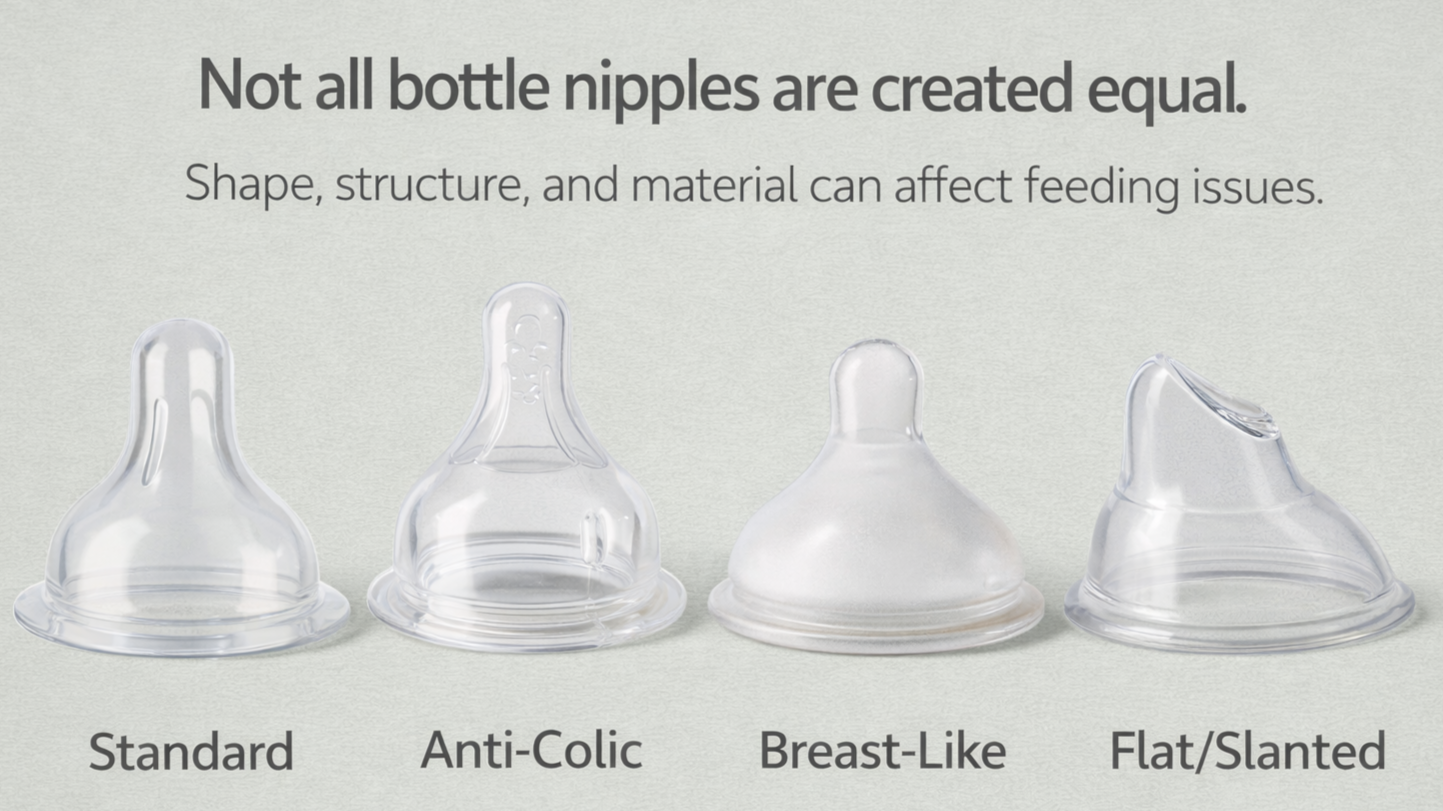
Baby Bottle Tip Variations
When feeding a baby with a bottle, parents often focus on the formula, milk supply, or feeding schedule. What is frequently overlooked is something much smaller: the bottle nipple.
The shape, structure, and flow of a bottle tip can have a significant impact on how a baby feeds. Subtle design differences can affect latch quality, air intake, milk flow, and overall feeding comfort. When the nipple shape doesn’t match a baby’s feeding ability or developmental stage, it can lead to frustration for both baby and parent.
Understanding the different types of bottle nipples—and when to use them—can help prevent common feeding issues before they start.
Why Bottle Nipple Design Matters
A bottle nipple acts as the baby’s interface with feeding. The way milk flows, how much effort is required to draw milk, and how the nipple fits in the baby’s mouth all influence feeding success.
When the design doesn’t align with a baby’s needs, babies may struggle to maintain a proper latch, swallow excess air, or refuse the bottle altogether. These challenges can sometimes be mistaken for reflux, colic, or feeding aversion when the real issue lies in the nipple design.
Below are several common bottle nipple styles and how they are typically used.
Standard Rounded Bottle Nipple
The standard rounded nipple is the most commonly included option with baby bottles. It features a symmetrical shape with a gradual taper toward the tip.
This style is generally suitable for newborns and younger infants who are still developing their feeding coordination. The rounded design encourages a centered latch and allows milk to flow at a controlled rate when paired with a slow-flow nipple.
However, if the nipple base is too narrow or the flow is too fast, babies may compensate by gulping or pulling in excess air. This can lead to gas, fussiness, or frequent pauses during feeding.
Typical use:
Newborn to around 3 months, depending on flow rate and baby’s feeding skills.
Potential issues:
Improper latch, air intake, or fatigue during feeding if flow is not appropriate.
Wide Base (Breast-Shaped) Bottle Nipple
Wide base nipples are designed to mimic the shape and feel of breastfeeding. They feature a broader base that encourages babies to open their mouths wider when latching.
This style is often recommended for babies who alternate between breast and bottle feeding because it supports a more natural latch similar to breastfeeding.
While the design works well for many babies, some infants with smaller mouths or developing oral strength may struggle to maintain a deep latch on the wider base.
Typical use:
Newborn through early infancy, especially for babies transitioning between breast and bottle.
Potential issues:
Difficulty maintaining latch or fatigue if the nipple base is too large for the baby’s mouth.
Orthodontic (Sloped or Angled) Bottle Nipple
Orthodontic nipples feature an angled or flattened shape that rests against the baby’s tongue and palate. These designs aim to support natural oral development and encourage controlled sucking patterns.
Because the shape differs from traditional nipples, some babies require time to adjust. However, for babies who struggle with standard nipples or who need extra support coordinating sucking and swallowing, this style can sometimes improve feeding efficiency.
Typical use:
Around 3 months and older, or when babies begin developing stronger sucking patterns.
Potential issues:
Initial refusal or confusion when transitioning from a traditional nipple shape.
Vented or Anti-Colic Bottle Nipple
Anti-colic nipples incorporate small air vents or specialized valves that allow air to flow into the bottle rather than into the baby’s mouth. This reduces the amount of swallowed air during feeding.
These nipples are commonly recommended for babies who experience frequent gas, fussiness, or discomfort after feeds.
However, while anti-colic systems can help reduce air intake, they may also change how milk flows. If the flow becomes inconsistent or too slow, babies may become frustrated during feeds.
Typical use:
Any age when babies show signs of gassiness or colic symptoms.
Potential issues:
Interrupted milk flow or longer feeding times if the venting system affects suction.
Flow Rate and Developmental Stages
In addition to shape, bottle nipples come in varying flow rates that correspond with developmental stages.
Slow-flow nipples are typically recommended for newborns, allowing babies to control the pace of feeding and develop coordinated sucking and swallowing.
As babies grow and feeding becomes more efficient, many transition to medium or faster flow rates. However, moving to faster flow too early can cause choking, coughing, or gulping.
Signs a flow rate may be inappropriate include:
Milk leaking from the baby’s mouth
Frequent coughing or gagging
Long, exhausting feeding sessions
Bottle refusal
Adjusting the flow rate or nipple style often resolves these issues.
Why Feeding Challenges Are Sometimes Missed
Feeding difficulties related to bottle nipple design are often subtle. During routine pediatric visits, appointments tend to focus on weight gain, growth milestones, and overall health. While these are essential indicators, they don’t always reveal the mechanics of how a baby feeds.
Parents may mention fussiness, gas, or feeding struggles, but without observing a full feeding session, it can be difficult to identify whether nipple shape, latch mechanics, or flow rate are contributing factors.
This is where feeding specialists can play an important role.
Feeding specialists focus specifically on the mechanics of infant feeding. By observing how a baby latches, sucks, and swallows, they can help identify small adjustments that may significantly improve feeding comfort and efficiency.
In many cases, these consultations can now happen virtually. A feeding specialist can watch a feeding session through video, assess bottle positioning and nipple choice, and guide parents toward adjustments that support smoother, more comfortable feeds.
Supporting More Comfortable Feeding
Every baby feeds a little differently, and what works well for one may not work for another. Bottle nipple shape, flow rate, and feeding technique all interact with a baby’s unique oral development and preferences.
If feeding feels consistently difficult, small adjustments to bottle tips can sometimes make a meaningful difference.
With the right information—and when needed, support from feeding specialists—parents can find a feeding approach that works comfortably for both baby and caregiver.