

The 4-Month Awareness Shift: How Your Proximity Shapes Your Baby’s Sleep
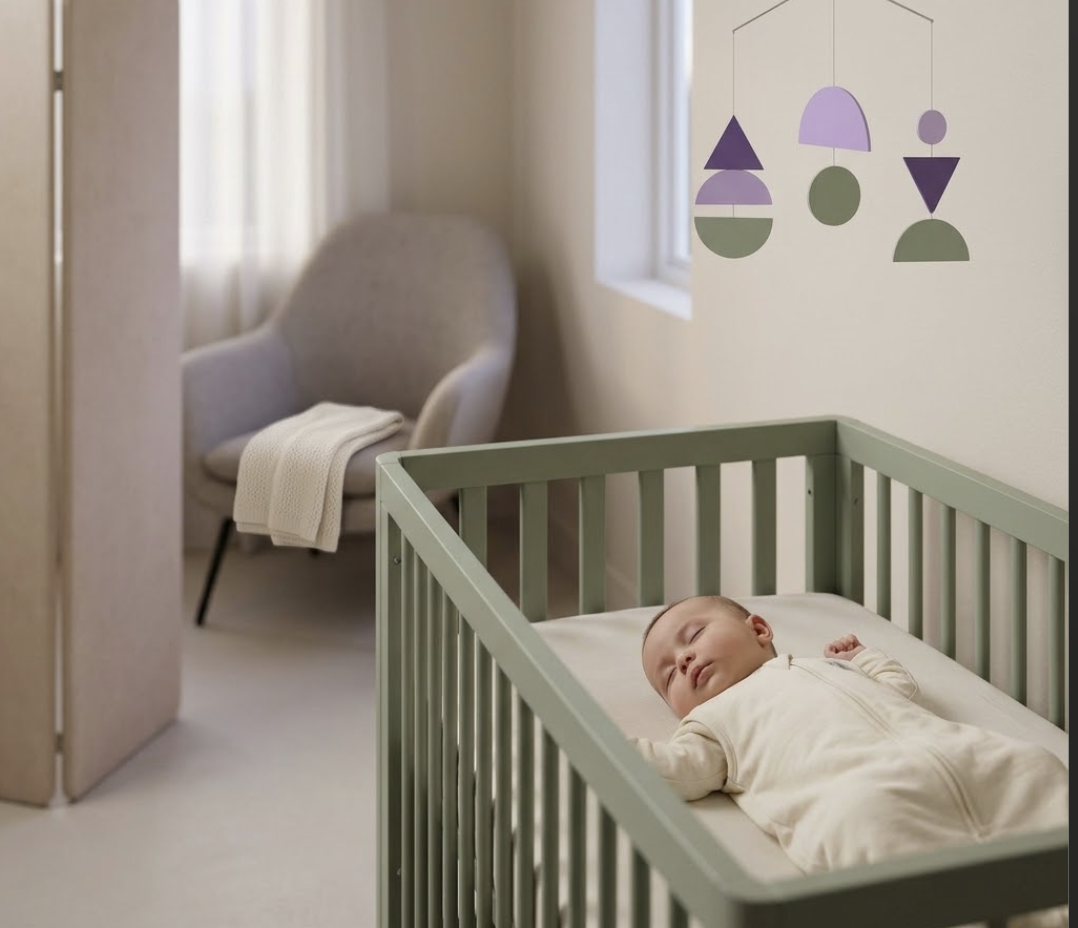
If you have noticed that your once-predictable sleeper is suddenly waking up the moment you step into the room—or if they seem to have a built-in radar for your exact presence—you are not alone.
Around the 4-month mark, babies undergo a massive developmental milestone known as the Awareness Shift. At this age, your baby is starting to become deeply aware of their surroundings. They are no longer sleeping through ambient household noises or ignoring sensory cues. Instead, they are actively scanning their environment, starting to understand your presence, and desiring your comforting connection through cuddling, feeding, or playing.
While this cognitive leap is an exciting sign of healthy development, it often introduces a unique challenge to overnight sleep and nap transitions.
The Science of the $45 \text{ to } 120$ Minute "Mini-Waking"
Human sleep is not a continuous state of rest; rather, it is divided into structural cycles. For a developing infant, these cycles typically last between $45$ and $120$ minutes.
At the end of each sleep cycle, your baby enters a very light, transitional sleep phase—often referred to as a "mini-waking." During this brief window:
The Sensory Scan: Your baby's brain performs a subconscious environment check to ensure they are safe.
The Proximity Trigger: If they sense your nearby presence (through your scent, a soft sigh, or a direct line of sight), their natural instinct is to wake up completely to seek interaction, reassurance, or a cozy cuddle.
The Cycle Interruption: Once they realize you are right next to them, the opportunity for them to seamlessly transition into their next sleep cycle on their own is lost, resulting in a full, bright-eyed awakening.
If they do not sense immediate proximity or visual cues, they are much more likely to practice self-soothing and drift back into another restorative deep sleep phase.
Restructuring the Sleep Space: 3 Safe Setup Options
Optimizing your nursery or bedroom layout can help your infant navigate these mini-wakings safely while preserving your close connection. Here are three expert-recommended configurations to consider:
1. The Offset Bassinet Arrangement
If you are room sharing, you do not have to move your baby far to make a big difference. Try moving the baby’s bassinet just a little further away from your immediate bedside. Clearing the direct line of sight and expanding the physical distance reduces the immediate scent and sound triggers that cause full awakenings.
2. The Visual Room Partition
Adding a safe, sturdy room divider or privacy screen between your bed and the bassinet is a highly effective middle ground. This visual boundary filters direct line-of-sight triggers, allowing your child the physical space to practice self-soothing when they wake briefly, while keeping them safely in the same room.
3. The Private Nursery Crib
Transitioning your baby to a crib in their own individual room is an excellent step, especially if you are planning to sleep train. This provides complete sensory isolation, encouraging longer, uninterrupted sleep cycles for both baby and parents.
💡 A Note on Safe Sleep Standards: The American Academy of Pediatrics (AAP) officially recommends room sharing for the first $6 \text{ to } 12$ months of life to promote safe sleep. However, many families find tremendous developmental and restorative benefits from adjusting physical boundaries or transitioning a baby to their own room around 4 months. Because every family and baby is beautifully unique, we always recommend discussing your sleep setup plans with your pediatrician to find what makes the most sense for your home.
Try the Interactive Sleep Space Planner™ Below!
To help you visualize how these different setups affect your baby’s sensory awareness and sleep cycles, we have created the interactive tool below.
Use the MissPoppins™ Sleep Space Planner to adjust your baby’s age, toggle visual dividers, simulate a "mini-waking" cycle, and even generate a personalized talking-point checklist to bring to your next pediatrician visit!