

Awareness of their surroundings: Bedtime routines
When your baby is between 8 to 12 weeks old, something magical happens: they start to understand routines. This developmental milestone is your golden opportunity to establish healthy sleep habits that will benefit your entire family for months—and even years—to come.
A predictable bedtime routine doesn't just help your baby fall asleep faster; it creates a sense of safety, security, and calm that makes nighttime less stressful for everyone involved.
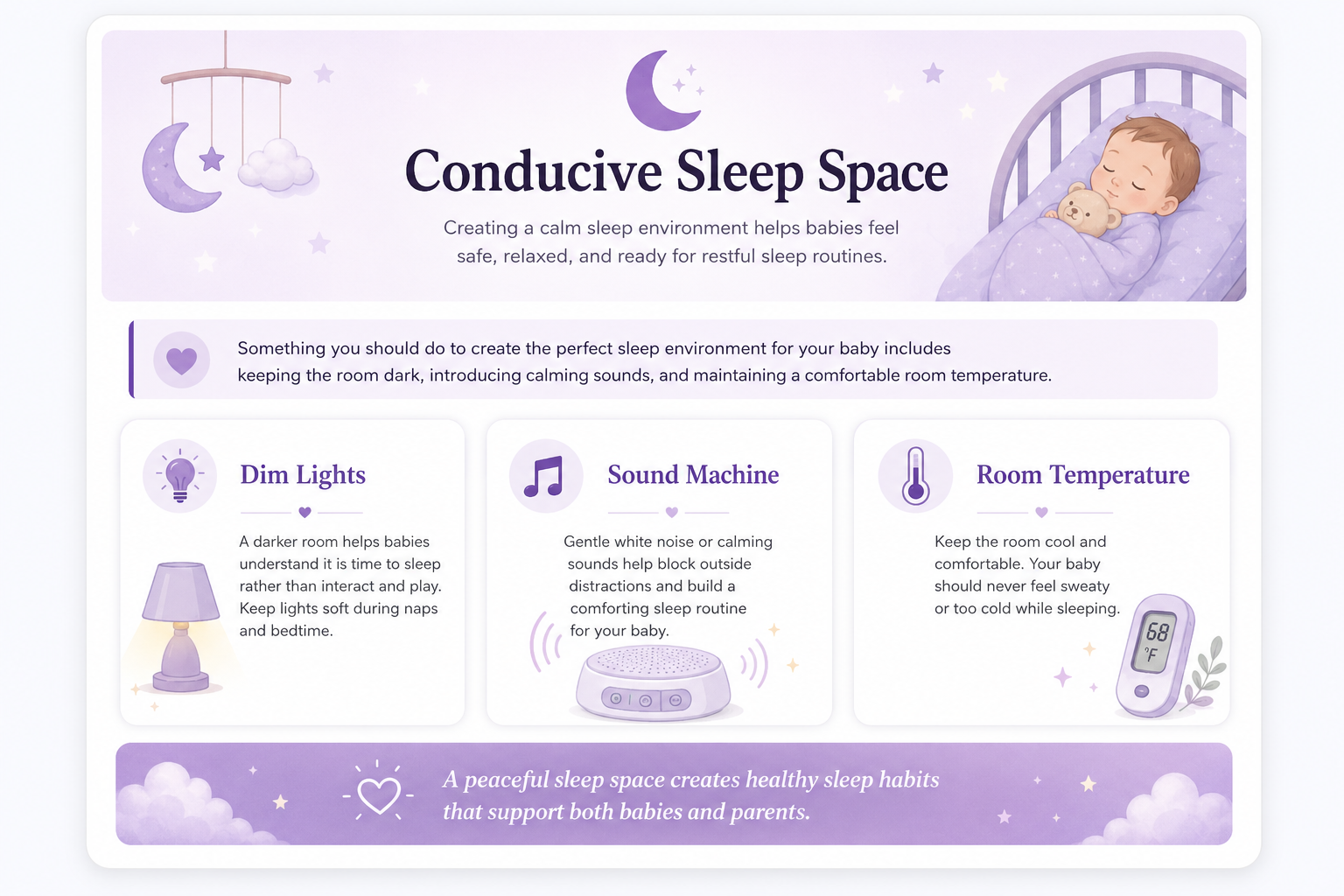
🌙 Creating a Conducive Sleep Space
Before we dive into the bedtime routine itself, let's talk about setting up the perfect sleep environment. Your baby's room should be a calm, peaceful sanctuary that signals one thing: it's time to rest.
The Three Pillars of a Perfect Sleep Environment
💡 Dim Lights
A darker room helps babies understand it is time to sleep rather than interact and play. Bright lights signal playtime and stimulation; darkness triggers the body's natural sleep hormones (melatonin). Keep lights soft and dim during naps and bedtime. Consider blackout curtains for daytime naps and a very dim nightlight for nighttime diaper changes.
🎵 Sound Machine
Gentle white noise or calming sounds help block outside distractions and build a comforting sleep routine for your baby. White noise mimics the constant whooshing sounds your baby heard in the womb, creating familiarity and comfort. It also masks household noises like siblings playing, dogs barking, or doors closing—preventing sudden sounds from waking your baby during sleep cycle transitions.
🌡️ Room Temperature
Keep the room cool and comfortable—ideally between 68-72°F (20-22°C). Your baby should never feel sweaty or too cold while sleeping. Overheating is a SIDS risk factor, so dress your baby in breathable sleepwear appropriate for the room temperature. A good rule of thumb: your baby should wear one more layer than you'd wear to be comfortable in that room.
✨ Why This Matters: A peaceful sleep space creates healthy sleep habits that support both babies and parents. When your baby associates their room with calm, safety, and rest, bedtime becomes easier—not a battle.
⏰ The Ideal Bedtime Routine Timeline (25-30 Minutes)
When your baby is between 8 to 12 weeks old, they start to recognize patterns and sequences. This is the perfect time to establish a predictable bedtime routine that they'll come to rely on as a signal that sleep is coming.
Why Predictability Matters
Make sure your bedtime routine is predictable and that you follow the same repetitive sequence every single day. This consistency helps your baby start associating nighttime activities with the understanding that it is sleep time. Think of it as creating a "sleep script" that your baby's brain begins to recognize and respond to automatically.
The 5-Step Bedtime Routine
Try having a 25-30 minute pre-sleep routine with your baby. Here's what to include, in this specific order:
1. 🧷 Diaper Change
Start fresh with a clean, dry diaper. This prevents middle-of-the-night wake-ups due to discomfort. Use this time to chat softly with your baby, making eye contact and building connection.
2. 🍼 Feeding
Whether breastfeeding or bottle-feeding, this is a crucial part of the routine. A full tummy helps babies sleep longer stretches. Keep the lights dim and the environment calm during this feeding.
3. ⏸️ Break Between Feeding and Sleeping
This is critical: do not let your baby fall asleep while feeding. Instead, include a 5-10 minute gap between the end of feeding and placing your baby in the crib. This could be a gentle bath, changing into pajamas, or reading a short board book. This break prevents a "feed-to-sleep association" that can create long-term sleep dependency issues.
4. 🤱 Rocking and Snuggling
This is the wind-down phase. Hold your baby close, rock gently, hum or sing a lullaby. Keep lights very dim. This physical closeness provides security and comfort. Watch for sleepy cues: yawning, rubbing eyes, or becoming quieter and calmer.
5. 🛏️ Into the Crib/Bassinet (Drowsy But Awake)
Place your baby down while they're drowsy but still awake. This is one of the most important sleep training principles: teaching your baby to fall asleep independently in their crib, rather than in your arms. It may take time for them to adjust, but this skill is foundational for healthy long-term sleep habits.
📍 Where to Perform Your Bedtime Routine
Here's something many new parents don't realize: all your bedtime routines should be performed in the nursery or bedroom where your baby will sleep.
Why Location Matters
If your baby sleeps in your room: Performing the bedtime routine in the nursery (where they'll eventually transition) helps them develop positive associations with that space. When it's time to move them to their own room, the transition will be smoother because the nursery already feels familiar and safe.
If your baby already sleeps in their own room: Keeping the routine in their room reinforces that this is their sleep space. It also minimizes distractions for both of you—no TV sounds, no siblings running by, no household chaos. Just you and your baby, focused entirely on each other.
The Power of Undivided Attention
When you perform your bedtime routine in your baby's bedroom, your baby knows that they will be getting your undivided attention. There are no distractions around the room for either of you. This time is more about snuggling and giving them your full presence.
This focused attention helps your baby develop a positive and secure feeling about sleeping by themselves. They learn: "This room is safe. My parent is calm and present. I am loved and protected." These emotional associations make independent sleep feel secure rather than scary.
🧩 How Many Activities Should You Include?
Try having at least 4-5 distinct activities in place before you put your baby in their crib or bassinet.
Why 4-5? This number is long enough to create a clear pattern that your baby can recognize, but short enough that it doesn't overstimulate or exhaust an already-tired baby. Each activity serves as a "stepping stone" toward sleep.
Sample 30-Minute Bedtime Routine
7:00 PM – Diaper change in nursery (5 min)
7:05 PM – Feeding (breast or bottle) in dim nursery (15 min)
7:20 PM – Pajamas on, gentle lullaby (3 min)
7:23 PM – Rocking and snuggling in nursery chair (5 min)
7:28 PM – Into crib drowsy but awake, sound machine on (2 min)
7:30 PM – Lights out, parent quietly exits
🌟 What Happens When You're Consistent
When you follow the same routine every single night, your baby's brain begins to anticipate what comes next. After a few weeks of consistency:
✅ Your baby starts to relax as soon as the routine begins
✅ They begin to self-soothe more effectively
✅ Bedtime battles decrease significantly
✅ Sleep becomes more predictable and restorative
✅ You feel more confident as a parent
The key is consistency. Even on weekends, even when traveling, even when you're exhausted—stick to the routine as closely as possible. Your baby thrives on predictability.
💡 Common Mistakes to Avoid
❌ Skipping the routine when your baby seems tired
Even if your baby appears exhausted, run through the full routine. It helps their body and brain prepare for sleep, leading to better quality rest.
❌ Letting your baby fall asleep during feeding
This creates a feed-to-sleep association that can become problematic later. Always include a gap between feeding and sleep.
❌ Rushing through the routine
The routine should feel calm and unhurried. If you're stressed and rushing, your baby will pick up on that energy.
❌ Changing the order of activities
Consistency is key. The same sequence every night helps your baby's brain recognize the pattern.
❌ Performing the routine in different rooms
Keep it in the nursery/bedroom. This builds strong sleep associations with that specific space.
🎯 Age-Specific Guidance
2-8 Weeks: Bedtime routines can be shorter (15-20 min) and simpler. Focus on diaper, feed, swaddle, into bassinet.
8-12 Weeks: The ideal time to establish the full 25-30 minute routine described above.
3-6 Months: Continue the routine and start gradually extending the "awake but drowsy" phase. Your baby should be more alert when placed in the crib.
6-12 Months: Maintain the routine. You can add a short book or gentle play activity before the final wind-down.
12-24 Months: The routine can expand to 30-40 minutes and include more interactive elements like choosing pajamas or picking out a book.
Still Struggling with Bedtime?
Every baby is different, and what works for one family might need adjustment for yours. If your baby is still fighting bedtime despite a consistent routine, consider connecting with a certified infant sleep consultant who can provide personalized guidance.