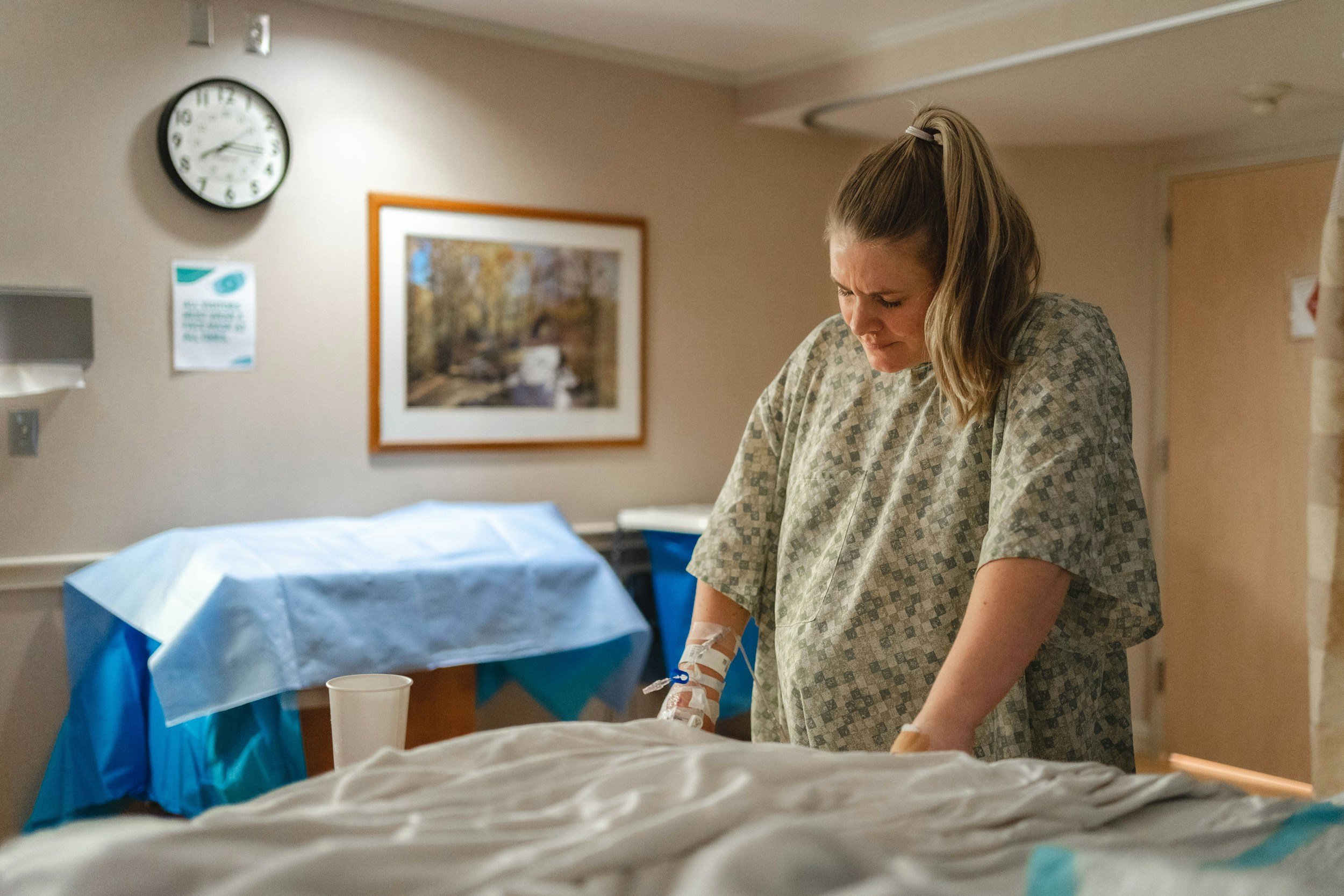
What are the Different Birthing Positions?
Giving birth on your side is not only possible, but for many people it can be a protective and physiologically supportive birthing position.
Traditionally, childbirth in hospitals is most often depicted with mothers lying flat on their backs in a position known as the lithotomy or supine position. While this position is convenient for medical providers, it is not always the most optimal for the birthing person’s comfort, pelvic mechanics, or perineal integrity.
How do Birthing Positions Play a Role During Labor
Context plays a role when choosing which birth position is right for you. A midwife or doula can explain the differences in birthing positions and techniques. Especially for low-risk pregnancies, position changes can be viable ways to ease discomfort and reduce time of labor.
The birth position you choose influences:
How gravity assists (or works against) the baby’s descent
Pelvic opening dimensions
Blood flow to the uterus and baby
The speed and control of pushing
Risk of perineal trauma
Common Birthing Positions
Different birth positions affect pelvic mechanics, comfort, and the way gravity influences labor. According to Evidence Based Birth, which synthesizes findings from randomized trials, observational studies, and systematic reviews, mobility and upright positioning during labor are generally associated with better maternal comfort and fewer interventions in low-risk pregnancies.
Side-lying (lateral) position
In this position, the birthing person lies on one side, often with support between the legs. Evidence Based Birth® notes that side-lying can reduce pressure on the perineum and allow for more controlled pushing, making it a commonly recommended option during the second stage of labor, especially for people with epidurals.
The side-lying birthing position, also called the lateral position, has been shown to be especially beneficial during the pushing stage.
Research supported by the National Institutes of Health (NIH) and summarized in systematic reviews (including Cochrane reviews cited by NIH-affiliated publications) indicates that side-lying birth can:
Reduce the risk of severe perineal tears (third- and fourth-degree tears)
Allow for slower, more controlled fetal descent
Decrease excessive pressure on the perineum
Improve maternal comfort and reduce fatigue
Maintain stable blood pressure and uterine blood flow
Unlike upright positions that rely heavily on gravity, side-lying positions allow the baby to descend more gradually, giving the perineal tissues time to stretch rather than tear. This controlled descent is a key reason lateral positioning is associated with lower rates of perineal trauma.
NIH-referenced studies also note that side-lying birth can be particularly helpful for:
First-time birthing parents
Those with epidurals
Situations where controlled pushing is recommended
People at higher risk for tearing
Upright or standing
Upright positions use gravity to assist fetal descent and may shorten labor. According to Evidence Based Birth®, upright labor positions are associated with fewer cesarean births and less need for epidural use in low-risk pregnancies, though they may contribute to faster descent during pushing.
Squatting (supported or unsupported)
Squatting increases the pelvic outlet diameter and can help the baby move down more efficiently. Evidence Based Birth® reports that while squatting can be effective for descent, rapid delivery in this position may increase perineal strain if pushing is not well controlled.
Hands-and-knees (all fours)
This position can relieve back pain and may help rotate babies who are in a posterior position. Evidence Based Birth® highlights hands-and-knees as a position that supports pelvic mobility and maternal comfort, particularly during labor rather than sustained pushing.
Semi-reclined
A semi-reclined position places the birthing person partially upright but still supported. Evidence Based Birth® notes that this position is commonly used in hospitals, though it limits pelvic expansion compared to more upright or mobile positions.
Kneeling
Kneeling allows for pelvic movement and reduces pressure on the tailbone. Evidence Based Birth® describes kneeling as another gravity-assisted option that can improve comfort and positioning during labor.
Sitting on a birthing stool or ball
Sitting upright on a stool or ball combines support with gravity assistance. According to Evidence Based Birth®, these positions may encourage fetal descent while helping reduce fatigue during longer labors.
Every Birthing Scenario is Different
Despite its benefits, side-lying birth is less commonly depicted in media and birth imagery because it requires providers to adjust their positioning and technique, something hospital systems have historically been slower to adopt. However, many midwives, obstetricians, and labor nurses increasingly recommend it as a perineum-protective alternative to supine pushing.
The reasons that medical providers also choose to have added doula support is because these experts can guide the intended mother through the process more efficiently. Aside from an added educational resource, doulas are experienced in using tools (such as birthing balls) to support movement, provide comfort massages, provide guidance through pressure points, inform on progress, and improve collaboration with their partner during the birthing process.
If you are having questions about the right positions for your delivery, consider sending a chat to any of the 24/7 readily available doula coaches at MissPoppins.
Last Edited: December 17, 2025